
You receive alerts too late or not at all, your teams lack responsiveness to storms, and compliance becomes a bureaucratic nightmare. This critical situation exposes your facilities and employees to major risks. Effective management of real-time weather alerts is the cornerstone of reliable lightning protection, compliant with IEC 62305 and FD C 17-108 standards, and adapted to the regulatory requirements of 2026.
Table of Contents
- Key points
- Prerequisites and tools for setting up weather safety alerts
- Configure and effectively use real-time weather alerts
- Study, verification and maintenance triggered by weather alerts
- Managing common errors and best practices to avoid pitfalls
- Expected results and key success indicators
- Optimize your weather alert management with LPS Manager
- How to effectively configure weather alerts for lightning safety?
Key points
| Point | Details |
|---|---|
| Precise geolocation | Automatic triggering of alerts without the need for local sensors |
| Custom settings | Fine-grained filtering by urgency level and time of day to avoid overloading |
| Maintenance Prioritization | AI-based emergency scoring system for planning interventions and checks |
| Secure report sharing | PDF export and web URL guaranteeing traceability and compliance |
| Normative integration | IEC 62305 compatibility and API connection for industrial environments |
Prerequisites and tools for setting up weather safety alerts
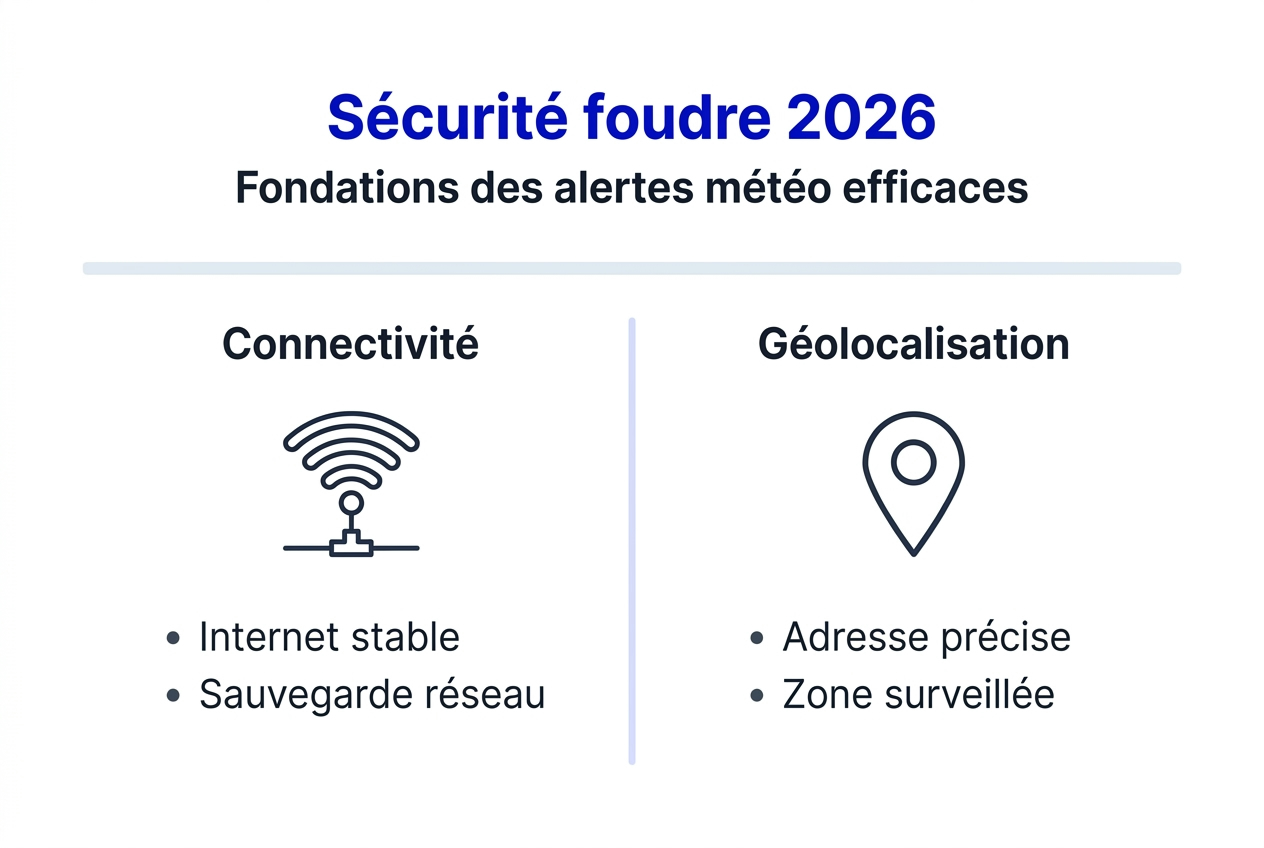
The success of a weather alert system dedicated to lightning protection rests on three technical foundations. These elements guarantee the reliability, relevance, and regulatory compliance of the notifications received. Each installation requires particular attention during the preparation phase to avoid critical failures.
Geolocation and geographic coverage
Accurate geographic positioning is crucial for the relevance of alerts. LPS Manager ensures automatic data collection without local sensors and GDPR compliance , relying on precise GPS coordinates for each case. A discrepancy of just a few hundred meters can be enough to miss a critical storm event. Accurately map each structure to be protected using cadastral data or onboard positioning systems.
Network infrastructure and connectivity
A stable internet connection is a non-negotiable prerequisite for receiving weather data and sending push or email notifications. Assess the network coverage of each site and plan for redundancy solutions in areas with low bandwidth. Isolated industrial facilities sometimes require satellite access or a dedicated 4G antenna.
Integrated management platform
Using a centralized solution like LPS Manager eliminates the need for costly local weather sensors. The platform aggregates international data from recognized services and correlates it to registered locations. This approach reduces hardware investment while increasing reliability through data source redundancy.
Data security and compliance
lightning protection security standards requires hosting within the European Union and end-to-end encryption. Verify that your solution implements password hashing, pseudonymization, and has an identified data protection officer. Classified ICPE facilities require enhanced traceability for regulatory audits.
Preparation checklist
- Verified GPS coordinates for each building, pylon or reservoir
- Minimum 4G or fiber internet connection with latency test
- GDPR validation of the chosen management platform
- Identification of stakeholders and access rights per site
| Element | Minimum prerequisites | Optimal recommendation |
|---|---|---|
| GPS accuracy | ±10 meters | ±5 meters |
| Network speed | 2 Mbps download | 10 Mbps download |
| Latency | <500 ms | <100 ms |
| Data hosting | EU (GDPR) | France (sovereignty) |
Pro tip: Conduct a full-scale test by creating a dummy folder in the immediate vicinity of your main installation. Compare the alerts received with field observations during a stormy week to validate the relevance of the monitoring perimeter.
Configure and effectively use real-time weather alerts
The precise configuration of alerts determines their operational value. An inappropriate configuration will either lead to an overload of unnecessary information or a dangerous silence in a critical situation. Follow this proven methodology to maximize the effectiveness of your system.
Step 1: Creating the geolocated folder
Begin by creating a geolocated folder specific to each site. Enter the full address, add aerial photos, and describe the structures to be protected: buildings, antennas, tanks, pylons. This initial mapping automatically activates weather monitoring of the perimeter. Add the contact information of people to be alerted in the event of a critical incident.
Step 2: Setting alert levels
Prioritizing alerts by level and time prevents overload and improves responsiveness. Distinguish between three categories: informational alerts (push notifications), urgent alerts (push notifications + audible notification), and critical alerts (email + SMS). Define thresholds based on the distance to the lightning strike: a 5 km radius for informational alerts, 2 km for urgent alerts, and a direct strike for critical alerts.
Step 3: Configuring sending schedules
Adapt the time slots for receiving notifications to your activity patterns. An industrial site operating 24/7 requires constant alerts. A construction site only needs notifications during the day. Customize the time slots for each type of alert to prevent information overload for your teams.
Step 4: Integration with existing systems
For complex industrial environments, use the Enterprise API to connect alerts to BMS, SCADA, or CMMS systems. This integration automates corrective actions: closing valves, shutting down sensitive processes, and activating additional protections. See the API documentation for real-time webhooks.
Step 5: Managing false alerts and adjustments
Analyze the alert history after two weeks of use. Identify irrelevant notifications and adjust the scope or thresholds. A false alert rate exceeding 20% indicates overly sensitive settings. Involve field teams in this calibration phase to refine the relevance of the alerts.
- Create the folder with the exact GPS coordinates and photos of the site
- Define three alert levels with different notification channels
- Set the sending times according to activity patterns
- Connect the API to industrial systems if needed
- Analyze the history and adjust the thresholds after 15 days
Pro tip: Schedule monthly tests by asking a colleague to simulate a critical alert. Verify that all recipients receive the notification within the expected timeframe. This procedure ensures the alerting system remains operational.
Study, verification and maintenance triggered by weather alerts
Weather alerts are not limited to immediate prevention. They guide intervention planning, optimize inspection routes, and inform compliance reports. This approach transforms passive monitoring into proactive safety management.
Post-alert verification protocol
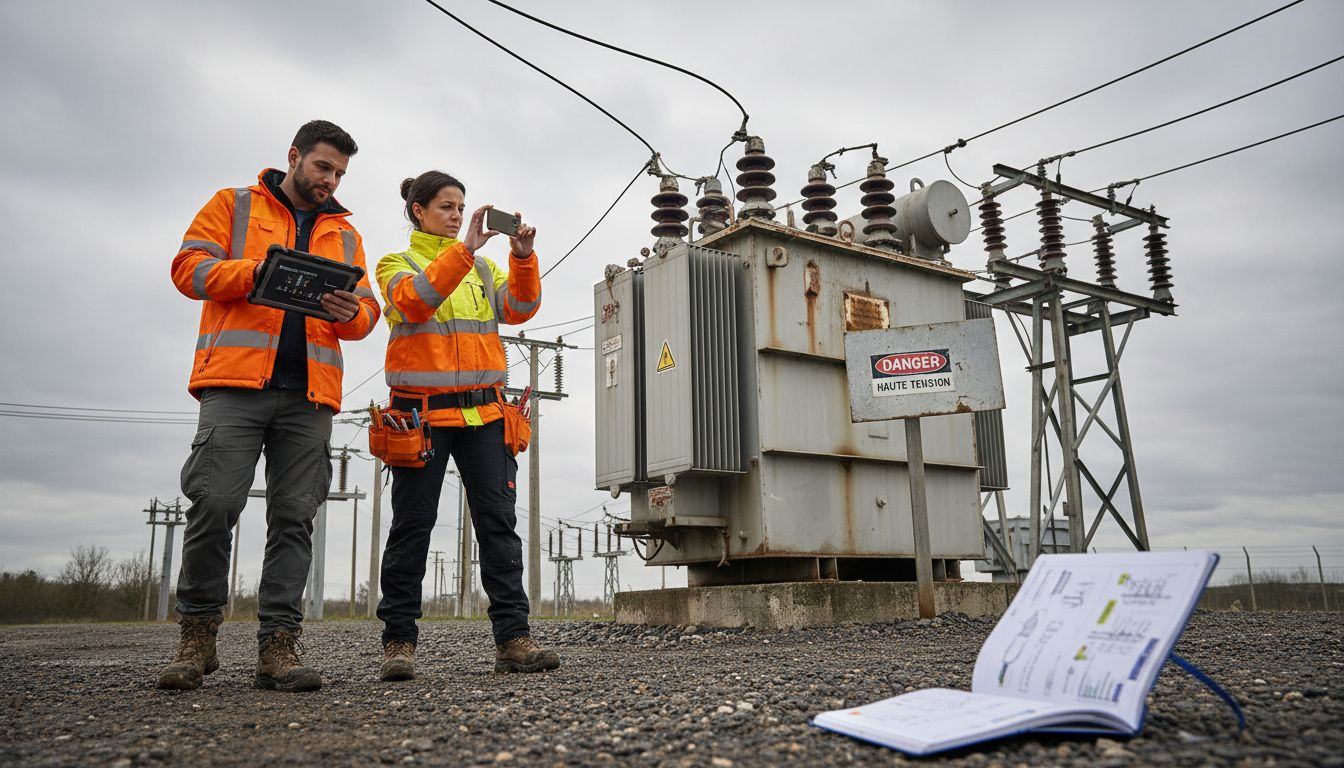
Upon receiving a lightning strike alert in the immediate vicinity, initiate a visual inspection within 48 hours. Follow the methodical process from top to bottom: lightning rods, down conductors, surge protectors, grounding rods. Reports with photos and an urgency score facilitate prioritization and rapid compliance . Consistently capture high-resolution photos to populate the digital file.
Urgency score and prioritization
The score, calculated by algorithms and AI, incorporates installation parameters, lightning strike history, and potentially harmful weather events. A score below 60% triggers a priority inspection. Between 60% and 80%, schedule intervention according to the annual calendar. Above 80%, maintain routine monitoring. This prioritization streamlines the allocation of field resources.
Secure sharing of findings
Instantly generate a PDF report or create a shareable web URL for clients, insurers, or regulatory authorities. This digital traceability meets best practices for lightning protection and simplifies compliance audits. Time-stamped reports provide legally admissible evidence in the event of a dispute or regulatory inspection.
Multi-site management with Fleet
For portfolios of more than 10 installations, the Fleet module centralizes coordination. Assign inspections based on the criticality score, the skills of the lightning installation inspectors , and geographical proximity. The dashboard displays the compliance status in real time and generates alerts for mandatory annual inspection deadlines.
Route optimization
Group interventions by geographic area after analyzing received alerts. An industrial site that has experienced three lightning strikes within a 2 km radius in two months requires increased attention. This data-driven approach replaces rigid scheduled maintenance with an adaptive strategy. Consult the recommendations for optimizing lightning protection for industrial sites .
- Systematic visual inspection within 48 hours of direct impact alert
- Automatic report generation with geotagged photos
- Share PDF or web URL for clients and authorities
- Intelligent planning via AI scoring and Fleet module
| Installation Score | Recommended action | Response time | Frequency of checks |
|---|---|---|---|
| 0-59% | Urgent verification | 48-72h | Quarterly |
| 60-79% | Normal planning | 2-4 weeks | Semiannual |
| 80-100% | Routine monitoring | According to the calendar | Annual |
Managing common errors and best practices to avoid pitfalls
Implementing a weather alert system presents recurring challenges. These errors compromise operational efficiency and create a false sense of security. Identify these pitfalls before they become critical.
Information overload
An overload of unfiltered alerts leads to up to 40% of critical messages being ignored . Teams become desensitized to notifications and stop responding to them. Limit informational alerts to a maximum of three per day under normal weather conditions. Reserve email and SMS channels for truly critical situations. Apply a strict rule: every alert must trigger an action or decision.
Geolocation inaccuracy
An error of a few hundred meters in GPS positioning places the site outside the optimal monitoring perimeter. Always verify the coordinates by comparing them with multiple sources: Google Maps, land registry records, and GPS field surveys. For large installations, create several monitoring points covering the entire area.
Connectivity failure
A site without a stable internet connection will not receive any real-time alerts. Install backup solutions: a backup 4G router, dual subscriptions with different providers, or a degraded mode that stores alerts for later viewing. Test network resilience by simulating outages.
Lack of team coordination
Alerts lose their value if interventions are not tracked and shared. Require systematic entry of findings into the case history after each visit. This collective documentation avoids redundant inspections and capitalizes on observations. A secure chat feature within the case facilitates information sharing between shifts.
Neglect of training
Untrained users cannot take full advantage of advanced features. Organize onboarding sessions for each new user. Explain the difference between alert levels, the high-low verification process, and how to use the urgency score. Allocate at least half a day for this training.
- Filter carefully to avoid more than three informational alerts per day
- Verify GPS accuracy by cross-referencing cadastral maps and field surveys
- Set up network redundancy with a backup 4G router
- Require systematic documentation of every intervention
- Train each new user for at least half a day
“The proliferation of unprioritized alerts led our team to disable notifications. We missed a critical impact in June 2025. Since then, we have implemented three strict levels, and the response rate has reached 98%.” — HSE Manager, Petrochemical Site
Pro tip: Create a weekly dashboard displaying the number of alerts received, the response time within 4 hours, and the percentage of false positives. These three metrics are enough to quickly identify issues and adjust the configuration. Share this report with management to maintain engagement.
Expected results and key success indicators
Optimized weather alert management generates measurable benefits in terms of safety, compliance, and operational efficiency. These gains are quantified through specific indicators that are monitored monthly.
Deliverability reliability
A properly configured system achieves a critical alert deliverability rate exceeding 95%. This percentage measures the proportion of notifications actually received by recipients within 5 minutes of the event. Monitor this metric by comparing generation and reception timestamps. A drop below 90% indicates a connectivity or configuration issue.
Report production speed
Reduced response time and increased compliance result in fewer incidents and greater customer satisfaction. Auditors equipped with digital tools produce a complete report in 45 minutes, compared to 90 minutes with paper-based methods. This 50% reduction in data entry time frees up resources for more on-site interventions. Measure the average time between the start of an inspection and the submission of the final report.
Document compliance
Systematic digital archiving increases compliance rates by 30% during regulatory audits. Classified facilities (ICPE) must provide a complete history of inspections and weather events. Centralizing this information in a single file with timestamps and geolocation facilitates the production of evidence. Calculate the percentage of sites that have completed their mandatory annual inspections.
Incident reduction
Implementing alerts coupled with post-event checks reduces lightning-related incidents by an average of 20%. This decrease results from early detection of damage and targeted maintenance. Track the number of production shutdowns, equipment failures, or reported incidents over a rolling 12-month period. Compare this to pre-digitalization data.
User satisfaction
Professionals using an integrated solution achieve a Net Promoter Score (NPS) above 70, compared to 45 for traditional methods. This satisfaction is measured via a biannual questionnaire sent to installers, auditors, and managers. The criteria evaluated include the relevance of alerts, the ease of report generation, and the quality of support.
| Indicator | Target | Measurement method | Frequency tracked |
|---|---|---|---|
| Deliverability of critical alerts | >95% | Ratio received/generated | Monthly |
| Production time report | <45 min | Inspection time → dispatch | By intervention |
| Site compliance rates | >90% | Sites up to date/total | Quarterly |
| Lightning incidents | -20% vs N-1 | Claims reports | Annual |
| User NPS | >70 | Satisfaction survey | Semiannual |
- Critical alert deliverability exceeding 95% in under 5 minutes
- Report production time reduced by half thanks to mobile data entry
- Document compliance increased by 30% for ICPE audits
- A 20% reduction in incidents after one year of implementation
- An NPS score above 70 indicates adoption and perceived value
Lightning safety compliance in France imposes strict requirements for traceability and responsiveness. These indicators demonstrate that investing in an integrated alert system pays for itself in less than 18 months through reduced non-compliance costs and loss prevention.
Optimize your weather alert management with LPS Manager
You now have the tools to deploy a high-performance weather alert system. Implementing these recommendations requires a platform capable of centralizing files, alerts, and reports in an environment compliant with IEC 62305 standards. LPS Manager precisely meets these needs: automatic geolocation without local sensors, prioritized real-time weather alerts, and a structured top-down verification and audit process with instant generation of shareable reports.
The solution accelerates your teams' responsiveness with AI-powered emergency scoring, facilitates multi-stakeholder collaboration via secure chat, and guarantees the document traceability required by regulatory authorities. The Pro and Expert versions include report customization and unlimited document management. The Enterprise offering adds an API for BMS/SCADA connectivity and a Fleet module for managing multi-site fleets. Try the basic version for free to assess the relevance of the alerts to your facilities, then upgrade according to your operational and regulatory needs.
How to effectively configure weather alerts for lightning safety?
What standards must be met for weather safety alerts?
Alerts must comply with IEC 62305 standards and the French standard FD C 17-108:2017. These standards mandate the tracking of weather events near protected facilities. Data hosting within the European Union ensures GDPR compliance.
Can we do without local weather sensors for monitoring?
Yes, precise geolocation of the folder automatically triggers the collection of international meteorological data. No physical sensors on-site are required to receive alerts for lightning strikes and critical weather events. This approach reduces investment and hardware maintenance costs.
How to avoid being overwhelmed by irrelevant alerts?
Set up three distinct levels with different channels: informational push notifications, urgent alerts with sound notifications, and critical alerts via email. Limit informational alerts to a maximum of three per day. Adjust the distance thresholds after analyzing the 15-day history to calibrate relevance.
What concrete benefits are expected after the implementation of alerts?
Organizations are seeing a 50% reduction in report generation time, a 30% increase in document compliance, and a 20% decrease in lightning-related incidents. Critical alert deliverability rates exceed 95% with optimal configuration. Return on investment is achieved in less than 18 months.
How can we ensure the traceability and sharing of verification reports?
Each generated report includes a timestamp, geolocation, and georeferenced photos. Exporting to PDF or creating a shareable web URL allows distribution to clients, insurers, and authorities without requiring access to the application. The complete history remains accessible in the digital file for regulatory audits.
Recommendation
- What precautions should be taken during a thunderstorm with lightning? – LPS Manager
- Weather and lightning safety: a complete guide for 2026
- Lightning protection: Safety and compliance in France
- 6 Best Lightning Protection Practices for Installers
- English Cursus: Complete Courses for 2026 – Bogaers Taleninstituut Tilburg
- Siguranța modern dental treatment in 2026
