
More than 450,000 lightning strikes are detected each year in France. This statistic illustrates the scale of the risk to industrial facilities and critical infrastructure. Weather plays a crucial role in preventing lightning damage. For lightning protection professionals, understanding and integrating meteorological data into their safety strategies is essential. This guide explores how to translate this information into concrete actions to effectively protect exposed sites.
Table of Contents
- Key points to remember
- Introduction to the crucial role of weather in lightning safety
- Mechanisms of weather influence on lightning risk
- French standards and regulations related to weather and lightning
- Digital tools and methods integrating weather data to optimize safety
- Use cases and concrete benefits of weather monitoring in lightning safety
- Best practices and recommendations for integrating weather into lightning protection safety
- Conclusion: Towards optimized safety thanks to weather and integrated technology
- Discover how LPS Manager optimizes your lightning protection using weather data
- What are the main meteorological factors influencing the risk of lightning?
- How does weather monitoring reduce response times in the event of a storm?
- What French standards govern the integration of weather data into lightning protection?
- Can reliable weather monitoring be ensured without local sensors?
Key points to remember
| Point | Details |
|---|---|
| Direct influence of the weather | Stormy conditions determine the probability and intensity of lightning strikes on installations. |
| Regulatory compliance | The NF EN 62305-2 standard requires that weather data be taken into account in the analysis of lightning risk. |
| Reduction of delays | Digital tools incorporating weather data reduce response times by 25% according to recent studies. |
| Sensorless monitoring | Geolocation and the aggregation of international data enable reliable monitoring without local equipment. |
| Essential traceability | Collaboration between stakeholders and data history recording ensure optimal risk management. |
Introduction to the crucial role of weather in lightning safety
Metropolitan France experiences sustained thunderstorm activity, with an average of 260 days of thunderstorms recorded annually. This high frequency requires constant vigilance from industrial site managers, installers, and inspectors of protection systems.
The consequences of inadequate monitoring are serious. Lightning strikes cause fires, damage to electronic equipment, and prolonged business interruptions. These events generate significant costs and endanger public safety.
Meteorology provides valuable indicators for anticipating risks. Understanding storm and lightning precautions and integrating climate data into safety protocols are fundamental steps.
Professionals must consider several meteorological factors to properly assess risk exposure:
- Formation of cumulonimbus clouds and intensity of storm cells
- Wind speed and direction favor the propagation of storm systems
- Humidity levels create conditions conducive to electrical discharges
- Temperature and atmospheric pressure influence the probability of being struck by lightning
The systematic integration of these parameters into intervention planning significantly improves responsiveness to critical situations. Managers can then schedule checks and audits according to periods of reduced risk, optimizing the safety of field teams.
Mechanisms of weather influence on lightning risk
Weather conditions directly affect the formation and intensity of atmospheric electrical discharges. Several phenomena interact to create high-risk situations.
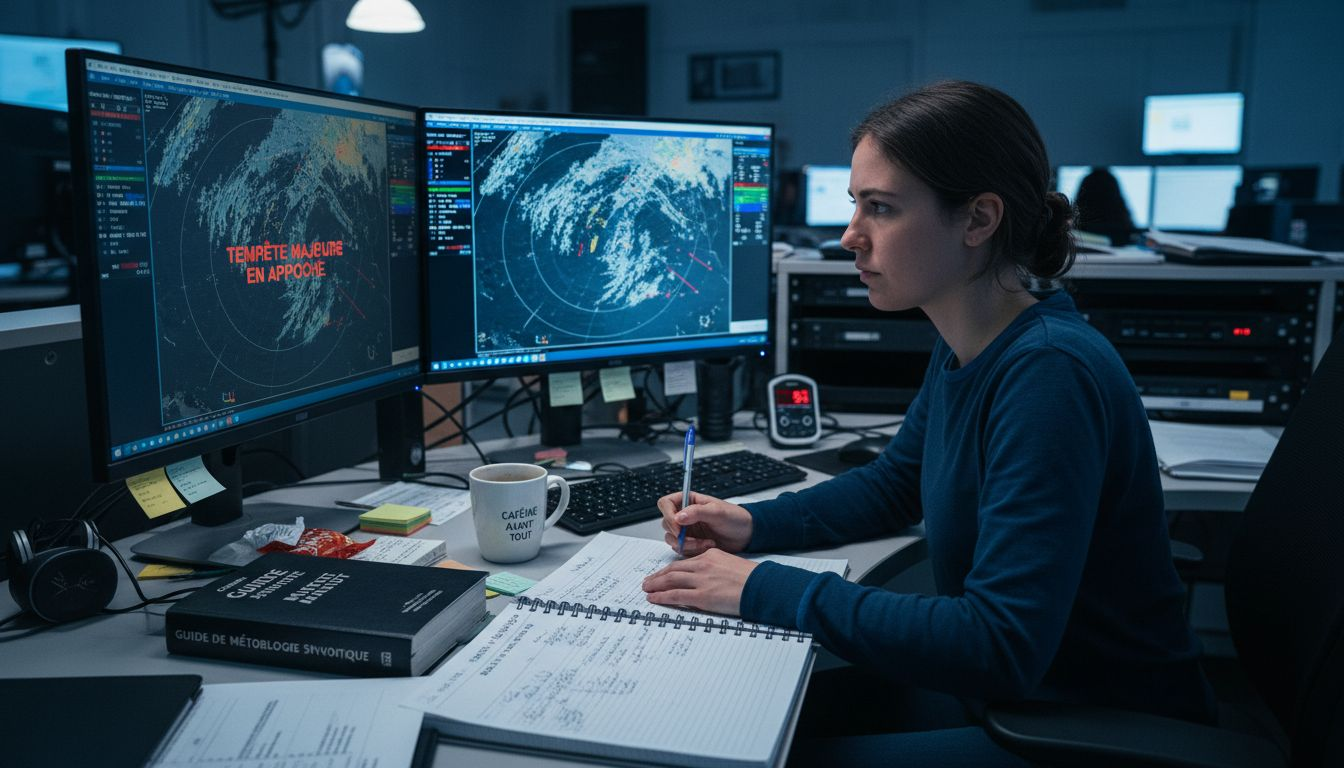
The process of thunderstorm formation begins with the accumulation of moisture in the atmosphere. When warm, humid air meets cooler air masses aloft, violent convective movements occur. These updrafts create the cumulonimbus clouds characteristic of thunderstorms.
surges , amplified by weather conditions, pose particular challenges to protection systems. Ambient humidity increases air conductivity, facilitating the propagation of discharges. Strong winds carry electrical charges over long distances, expanding the exposed areas.
Here are the key stages in the development of a potentially dangerous thunderstorm:
- Accumulation of electrical charges in clouds through friction of ice and water particles
- Gradual separation of positive and negative charges creates an intense electric field
- Ionization of the air occurs when the electric field exceeds the dielectric breakdown threshold
- A violent electrical discharge between cloud and ground or between two clouds
- Propagation of overvoltages in electrical networks and connected systems
Temperature also plays a crucial role. Significant temperature differences between the ground and higher altitudes promote atmospheric instability. This instability amplifies convective movements and increases the probability of lightning strikes.
Pro tip: Install temperature and humidity sensors at your critical sites to anticipate periods of high risk. Combine this data with weather alerts to refine your preventative action protocols.
lightning protection and safety measures to local conditions. Professionals can then correctly size lightning rods and surge protectors, taking into account the specific climatic characteristics of each site.
French standards and regulations related to weather and lightning
French regulations impose specific requirements for lightning protection. The decree of October 4, 2010, is the reference text for facilities classified for environmental protection.
This decree requires a Lightning Risk Analysis (LRA) to assess the exposure of installations. Depending on the results of this analysis, a Lightning Technical Study (LTS) may be necessary to define appropriate protection measures.
The NF EN 62305-2 standard provides the methodology for this analysis by explicitly integrating meteorological data. It defines the parameters to be considered for calculating the acceptable risk and sizing the protection systems.
The regulatory obligations are structured around several axes:
- Initial risk assessment based on local lightning strike density
- Regional weather conditions are taken into account when calculating the level of protection
- Periodic inspections of the facilities according to a defined schedule
- Maintaining a logbook including a history of interventions and events
The following table summarizes the main requirements applicable to industrial facilities:
| Obligation | Reference | Frequency | Weather impact |
|---|---|---|---|
| Lightning risk analysis | NF EN 62305-2 | Initial + revision if modified | Lightning strike density (Ng) |
| Lightning technical study | Order dated 04/10/2010 | If risk identified | local climate parameters |
| Visual inspection | NF C 17-102 | Annual | Post-storm inspection recommended |
| Full verification | NF C 17-102 | Depending on the level of protection | Favorable weather conditions required |
Regulatory compliance protects operators legally. In the event of an incident, the authorities verify that the documents are properly maintained and that the required inspection intervals are met. Failure to maintain traceability can lead to administrative and criminal penalties.
Professionals must maintain up-to-date technical files, including installation plans, verification reports, and intervention histories. This documentation must remain accessible for inspections and compliance audits.
Digital tools and methods integrating weather data to optimize safety
Digital technologies are transforming lightning protection management. Modern platforms automatically collect and analyze meteorological data to generate early warnings.
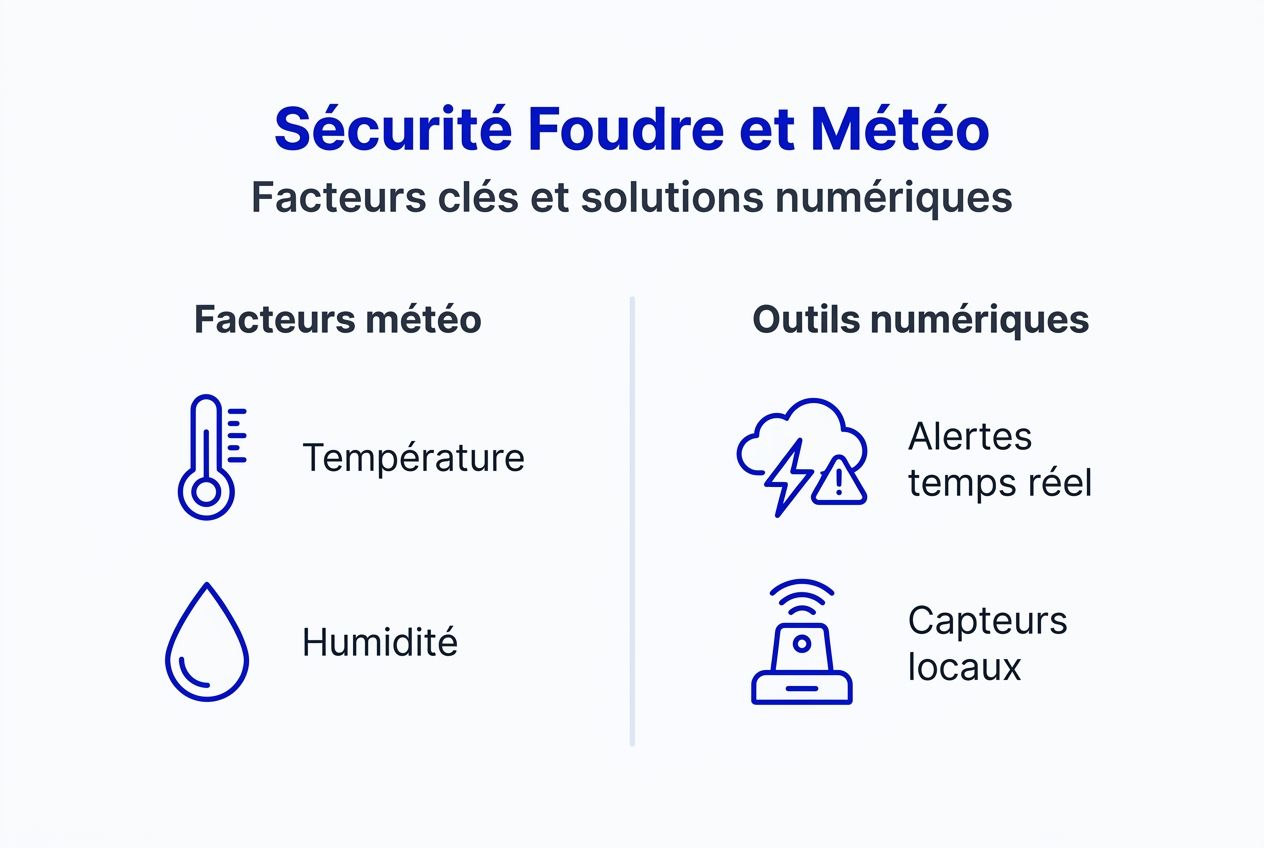
Current solutions rely on geolocation to trigger weather monitoring without dedicated on-site sensors. This approach aggregates international data from recognized lightning detection networks and weather stations. Accuracy reaches several hundred meters, sufficient to anticipate risks.
Artificial intelligence calculates a condition score for the facilities by cross-referencing multiple parameters:
- Technical specifications of the installed protection system
- History of lightning events recorded nearby
- Recent weather conditions (wind, rain, drought)
- Status of communication equipment, if present
This score out of 100 provides an immediate reading of the risk level. Personalized alerts are sent via push notification for standard situations and by email for critical alerts requiring rapid intervention.
The simplified calculation of the protection level according to FD C 17-108:2017 is directly integrated. This method, derived from IEC 62305-2, applies to the majority of standard buildings. For complex structures, the system recommends a complete study by a specialized firm.
The benefits of real-time weather monitoring include a significant reduction in unnecessary interventions. Teams are deployed only when weather conditions indicate a genuine risk. This optimization lowers operational costs while maintaining a high level of safety.
Pro tip: Set up different alert thresholds depending on the type of installation. A site with sensitive equipment requires earlier notifications than a typical storage building. Adjust the settings after a few weeks of observation to eliminate false alarms.
Weather monitoring principles rely on continuous data collection. A stable internet connection ensures the reception of real-time information. Automatic data logging allows for the analysis of trends and the identification of high-risk periods.
Use cases and concrete benefits of weather monitoring in lightning safety
Experience has demonstrated the operational effectiveness of weather-integrated monitoring systems. A 25% reduction in response times represents a measurable gain for multi-site managers.
An industrial site classified as a Classified Installation for Environmental Protection (ICPE) has reduced its inspection costs by 40% by focusing interventions on post-storm periods identified by alerts. Teams are deployed with the necessary information, optimizing each site visit. Inspection reports now include historical weather data, enhancing traceability.
The comparative table illustrates the differences before and after the deployment of a digital solution:
| Indicator | Before | After | Improvement |
|---|---|---|---|
| Average reaction time | 48 hours | 6 hours | 87 % |
| Unnecessary interventions | 35% of journeys | 8% of journeys | 77% discount |
| Unanticipated losses | 12 per year | 2 per year | 83% decrease |
| Documentary research time | 45 minutes per case | 5 minutes per case | 89% gain |
The benefits extend to regulatory compliance. Automatic logging of alerts and interventions simplifies compliance audits. Inspectors gain rapid access to documented evidence of preventive and corrective actions.
Collaboration between stakeholders also benefits from these tools. Managers instantly share reports with auditors and installers. Exchanges via integrated messaging maintain traceability of decisions. This transparency accelerates the resolution of detected non-conformities.
For sites exposed to extreme weather conditions, anticipation makes all the difference. A telecom tower operator prevented three major incidents by scheduling preventative inspections following warnings of high winds and thunderstorms. Teams reinforced the anchors before the storms arrived.
The benefits also extend to optimizing lightning protection by identifying weak points. Analyzing the collected data reveals the areas where lightning strikes are concentrated. Investments in additional protection are then decided based on statistical evidence.
Best practices and recommendations for integrating weather into lightning protection safety
The effectiveness of a protection system relies on clear protocols and rigorous coordination between stakeholders. Here are the essential steps to maximize the benefits of meteorological integration.
-
Establish a protocol for responding to alerts that varies according to their level of criticality. Define the thresholds that trigger a visual inspection, a full verification, or a temporary safety shutdown. Document the responsibilities of each stakeholder to avoid ambiguities.
-
Create an inspection schedule that takes into account high-risk seasons. In France, the months of May to September see the majority of thunderstorms. Schedule preventative inspections at the beginning of the storm season to identify weaknesses before major stresses occur.
-
Centralize documentation in a single system accessible to managers, installers, and inspectors. Reports, photos, and diagrams must be immediately available to authorized parties. This centralization eliminates tedious searches and the risk of information loss.
-
Train field teams to interpret weather alerts. Technicians must understand the difference between an isolated thunderstorm and an organized storm system. This skill improves on-site decision-making during interventions.
-
Organize quarterly reviews of the collected data with all stakeholders. Analyze trends, identify periods of recurring risk, and adjust protocols based on the lessons learned. This continuous improvement approach progressively refines the protection strategy.
-
Establish information-sharing processes between sites within the same network. A major event at one facility can signal similar conditions at other nearby sites. Cross-site communication accelerates preventative measures.
Pro tip: Appoint a weather and lightning coordinator within your organization. This person centralizes alerts, coordinates responses, and keeps documentation up to date. Their pivotal role ensures consistent actions across all facilities.
Lightning protection practices for installers include systematically checking weather conditions before any work begins. An approaching storm necessitates postponing work at height for the safety of the teams.
Using historical lightning protection weather allows for more precise risk assessments during installation upgrades. Actual data replaces generic statistical assumptions, improving the accuracy of the design.
Conclusion: Towards optimized safety thanks to weather and integrated technology
Integrating meteorological data into lightning protection management represents a major step forward for French professionals. Compliance with NF EN 62305 standards and regulatory requirements is becoming more accessible thanks to modern digital tools.
Measurable benefits include reduced response times, optimized operating costs, and improved traceability. Managers now have real-time visibility into the status of their facilities and imminent risks.
Technology continues to evolve toward increased automation and more powerful artificial intelligence. Future systems will incorporate sophisticated predictive models, anticipating events several days in advance. This evolution strengthens professionals' ability to effectively protect their sites.
Adopting these solutions is a strategic investment. It positions organizations in regulatory compliance while improving operational resilience to increasing climate risks.
Discover how LPS Manager optimizes your lightning protection using weather data
LPS Manager transforms the management of your lightning protection systems by automatically integrating meteorological data. Our platform monitors your sites without requiring costly local sensors, leveraging recognized international networks.
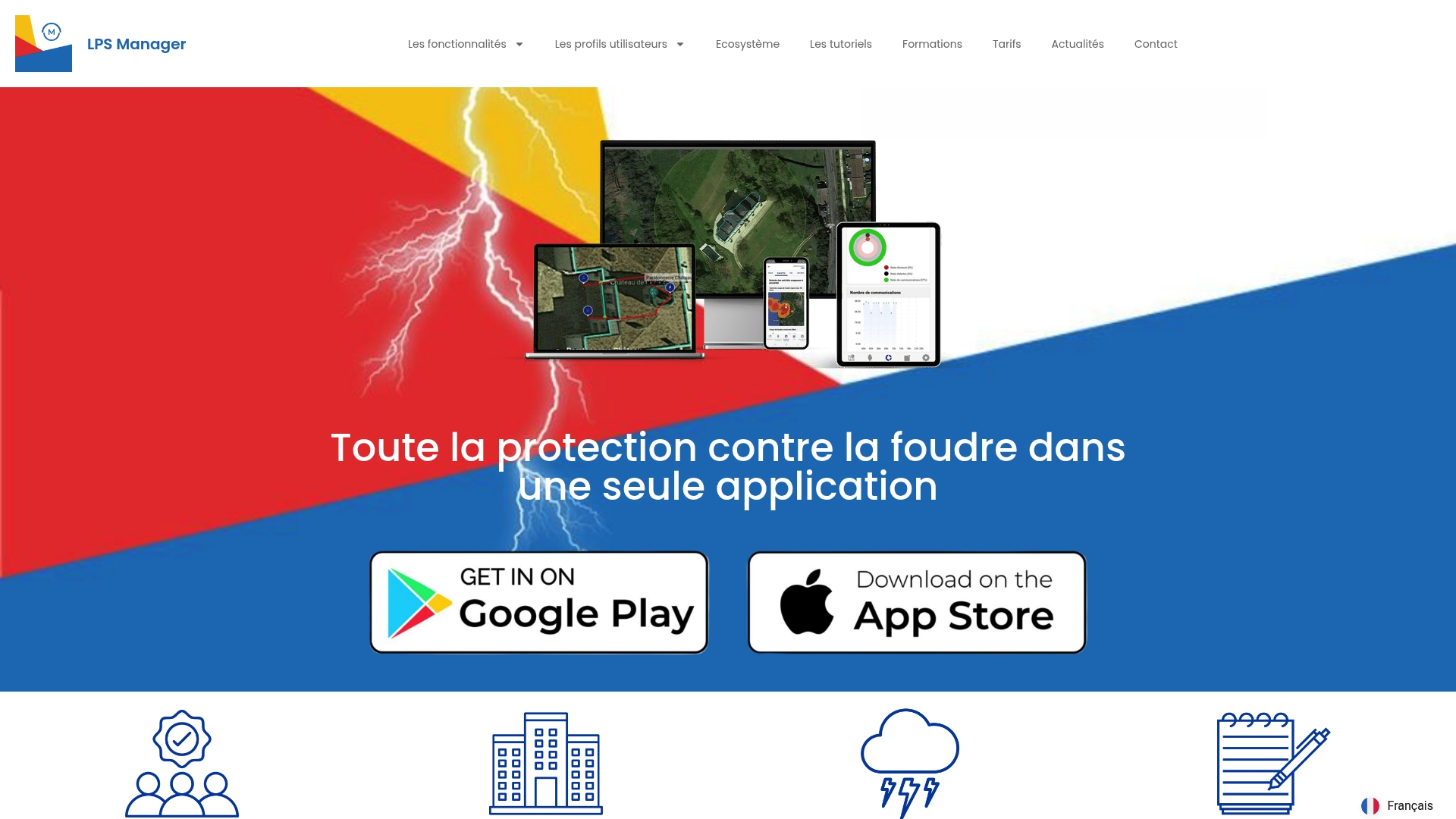
You receive personalized alerts via push notification and email as soon as a risk emerges. The system continuously analyzes weather conditions and calculates a status score for each installation. This proactive approach drastically reduces your response times to critical situations.
The solution centralizes all your verification reports, installation plans, and intervention histories. Field teams instantly access the necessary information via mobile and desktop applications. This comprehensive traceability facilitates your lightning protection, safety, and compliance audits.
Real-time weather alerts allow you to anticipate periods of high risk and plan your operations accordingly. This optimizes your resources while maintaining maximum safety. The verification and audit simplifies the production of reports compliant with NF C 17-102 standards, which can be immediately shared with all stakeholders.
What are the main meteorological factors influencing the risk of lightning?
Key factors include the presence of thunderstorms with developed cumulonimbus clouds, high humidity levels which increase atmospheric conductivity, and strong winds which amplify the propagation of storm systems. The frequency of lightning strikes in a given area is also a direct indicator of the level of exposure. These combined conditions significantly increase the intensity and likelihood of impacts on protected facilities.
How does weather monitoring reduce response times in the event of a storm?
Real-time alerts warn teams several hours before the arrival of a dangerous storm system. This early warning allows for logistical preparation and rapid deployment of targeted interventions. Managers can organize human and material resources in advance, eliminating time wasted due to late detection. Studies show an average reduction of 25% in the time between risk detection and the implementation of corrective measures.
What French standards govern the integration of weather data into lightning protection?
The decree of October 4, 2010, mandates lightning risk analyses for classified installations. The NF EN 62305-2 standard defines the methodology, explicitly including local meteorological parameters such as lightning strike density. These standards guarantee the safety of people and the legal compliance of installed protection systems.
Can reliable weather monitoring be ensured without local sensors?
Yes, geolocation combined with data aggregation from international lightning detection networks provides accurate monitoring. Modern systems collect information from multiple recognized sources and cross-reference it to ensure reliability. Solutions like LPS Manager demonstrate the operational efficiency of this approach, eliminating the installation and maintenance costs of dedicated sensors.