


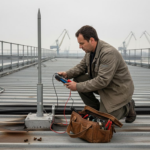
Managing lightning protection at an industrial site is never simple. Legal obligations, the complexity of the installations, and the need to ensure maximum equipment safety make every decision crucial. An oversight or an incomplete analysis can have serious consequences for your business and regulatory compliance.
The good news: there are concrete methods, recognized by French and international standards, for assessing risks, installing appropriate systems, and maintaining optimal control over your facilities. You will discover how to apply these tailored solutions with practical advice, dedicated digital tools, and tips for collaborating with certified professionals.
These next steps will allow you to anticipate hazards, secure your sensitive equipment, and simplify your verification procedures. Prepare to master industrial lightning protection with clear and immediately applicable actions.
Table of Contents
- 1. Assess the lightning risk according to current standards
- 2. Choose systems adapted to each industrial site
- 3. Conduct a complete and documented annual audit
- 4. Use digital tools for traceability and sharing
- 5. Implement weather monitoring and real-time alerts
- 6. Collaborate with certified professionals through a specialized directory
Quick Summary
| Key Message | Explanation |
|---|---|
| 1. Assess the lightning risk correctly | Risk assessment is fundamental to determining the appropriate level of protection for your industrial site. |
| 2. Choose suitable surge protectors | Select the type of surge protector according to the sensitivity of your equipment and your environment. |
| 3. Conduct thorough annual checks | Document each check to maintain traceability and justify your legal compliance. |
| 4. Use digital tools | Centralize your lightning protection documentation to improve traceability and intervention management. |
| 5. Monitor real-time weather alerts | Set up an alert system to anticipate storms and protect your facilities. |
1. Assess the lightning risk according to current standards
The first step to ensuring effective protection begins with an accurate risk assessment. Without this solid foundation, any lightning protection system is likely to be unsuitable for your specific situation.
Why this assessment is crucial: The IEC 62305 series of standards provides a comprehensive framework for rigorously calculating risk. It covers general principles, risk analysis, physical damage and human risks, as well as network protection.
Legal responsibilities are not optional. For industrial sites classified as ICPE (Installations Classées Pour l'Environnement - Classified Installations for the Environment), Lightning Risk Analysis (ARF) and Lightning Technical Study (ETF) constitute a legal obligation, not a simple recommendation.
This analysis assesses the direct and indirect dangers associated with lightning. It takes into account several factors that are crucial for your installation:
- Geographic location and lightning strike density of the site
- Nature and characteristics of the structure (height, materials, use)
- Estimated frequency of lightning strikes in the area
- Presence of critical services or sensitive equipment
- Risks associated with potential damage (fire, explosion, data loss)
You must also consider the specific French regulatory context applicable to your sector. Hospital facilities, data centers, oil sites, and facilities handling explosive materials require an even more rigorous approach.
A properly conducted risk assessment allows you to accurately size your protection system and justify your investments to the authorities.
In practice, this assessment must not remain theoretical. It must incorporate your actual operational and budgetary constraints. The results of this analysis directly determine the required level of protection and the type of equipment to be installed.
Pro tip: Methodically document all input parameters of your risk assessment (precise location, dimensions, materials, occupants) to ensure complete traceability and facilitate subsequent updates during annual checks.
2. Choose systems adapted to each industrial site
No two industrial sites are ever the same. Risks, sensitive equipment, and configurations vary considerably, meaning your lightning protection needs to be customized.
The first thing to understand is the diversity of lightning threats. You face direct impacts on structures and induced overvoltages in electrical networks. These two risks require distinct and complementary protection solutions.
This is where the strategic choice of surge protectors comes into play. The NF C 15-100 standard mandates the installation of surge protectors in industrial buildings equipped with lightning rods or supplied by overhead lines. But this requirement is only the starting point.
The choice between the different types of surge protectors depends directly on your specific context:
- Type 1 for installations directly exposed or on the first line of protection
- Type 2 for intermediate protection in electrical panels
- Type 3 for end protections near sensitive equipment
Your sensitivity to the equipment is a determining factor. Industrial sites with control systems, programmable logic controllers, or critical IT equipment require much more sophisticated protection than a simple storage shed.
Also consider the topography of your site and its lightning strike density. A site in a mountainous area or a region prone to frequent thunderstorms does not benefit from the same level of protection as a site in an urban area with nearby buildings.
The level of protection required at your site determines not only the type of surge protector, but also its calibration and precise location in the electrical installation.
The configuration of your power supply also matters. If you receive power via overhead lines, your primary protection requirements increase significantly. Underground connections offer greater natural protection.
In practice, this adaptation often means working with multiple coordinated layers of protection. A multi-layered protection architecture ensures that each type of threat is controlled at its critical point of entry.
Pro tip: Accurately document the sensitivity of each critical piece of equipment on your site (withstand voltage, operating current) to justify the choice of each surge protector and avoid incompatibilities during subsequent installations.
3. Conduct a complete and documented annual audit
The annual inspection is not a mere administrative formality. It is your guarantee that the lightning protection system is actually working and that your site remains safe from electrical hazards.
Without regular documentation, you lose track of your installation's condition. This creates dangerous gaps in your maintenance history and complicates your compliance demonstrations to authorities.
A complete check should cover all elements of your protection system. This means examining lightning rods, down conductors, surge arresters, and especially the grounding connections that ensure the discharge of current.
Here are the key steps of a structured audit:
- Visual inspection of lightning rods and down conductors
- Checking the integrity of the fasteners and contact points
- Monitoring the condition of surge protectors and their indicators
- Measurement of grounding resistance
- Review of equipotentiality and additional protections
- Identification of any damaged or faulty components
Documenting your results transforms each audit into concrete evidence. A comprehensive and documented annual audit creates an essential historical record to demonstrate your compliance with standards and facilitates the diagnosis of future problems.
Photographs play a crucial role in this documentation. They capture the actual state of your installation and allow for year-over-year comparisons. Photos must be dated and geolocated for complete traceability.
A verification without documentation is not legally valid. Written and time-stamped proof of your verifications demonstrates your commitment to security.
When you identify a problem, document its location, nature, and corrective actions precisely. This thoroughness facilitates subsequent interventions and prevents the recurrence of defects.
An annual inspection is the minimum regulatory standard, but some high-risk sites require more frequent checks. Your inspection schedule should be based on your specific context and incident history.
Pro tip: Schedule your annual checks for the same month each year and store all your reports in a centralized and accessible way to create a long-term tracking record that facilitates audits and maintenance decisions.
4. Use digital tools for traceability and sharing
Manually managing lightning protection documentation creates significant operational risks. Scattered documents, multiple versions, and a lack of centralized tracking complicate compliance demonstrations and slow down interventions.
Digital tools are transforming this reality by creating a comprehensive and accessible traceability system. You save time, reduce errors, and facilitate collaboration between all stakeholders.
A dedicated digital tool centralizes your documentation in a structured way. Every verification report, every inspection photo, and every weather alert is found in one place, accessible in real time.
This means several concrete advantages for your business:
- Instant access to the complete history of each installation
- Secure sharing of reports with clients and authorities without risk of loss
- Time-stamped tracking of all maintenance actions and checks
- Automated alerts so you never forget a mandatory annual check-up
- Simplified collaboration between installers, inspectors and site managers
Modern platforms like LPS Manager centralize all your installation documentation . They allow you to generate professional reports directly from your field data, without manual re-entry.
Data sharing becomes a strategic asset for your customer relationships. Instead of sending a PDF by email, you can share secure access where the customer can view their reports at any time. This demonstrates your professionalism and commitment to transparency.
Digital traceability also creates protection for you. Every action is recorded with its date and author, creating irrefutable proof in the event of a regulatory audit or dispute.
Digital tools transform your raw data into documented evidence, essential for justifying your compliance with standards and facilitating multi-site management.
You can also analyze trends in your equipment portfolio. Which sites have experienced lightning strikes? Which equipment regularly fails? This information helps you optimize your future interventions.
Mobility is another key factor. Accessing your files from the field, consulting historical data on-site, and writing your reports directly on-site becomes possible with a modern mobile application.
Pro tip: Choose a tool that allows you to export your data and provides customizable reports to suit your specific needs, ensuring that you are not locked into a proprietary solution if your needs change.
5. Implement weather monitoring and real-time alerts
Waiting for a storm to arrive without warning exposes your site to unnecessary risks. Active weather monitoring and instant alerts transform your ability to protect people and equipment.
Real-time monitoring works differently from traditional weather forecasting. It specifically targets your location and alerts you as soon as a lightning threat approaches, not 12 hours after it has passed.
Real-time lightning alert services that meet industry standards send alert start and end messages. You know precisely when the storm is approaching and when the danger is subsiding, allowing for tailored management of your operations.
Some services even offer pre-alerts 24 to 48 hours before a storm. This gives you time to plan your operations, stop critical work, or take additional precautions.
Here are the key advantages of active monitoring:
- Accident prevention by immobilizing personnel in exposed areas before the arrival of danger
- Protecting equipment by triggering safe shutdown procedures before an impact
- Reducing inactivity by resuming quickly after the alert ends
- Regulatory compliance by demonstrating your ongoing vigilance
- Event history recording all detected impacts for analysis
The monitoring system operates 24/7 with no local installation required. You don't need any sensors on your site to receive these alerts, which greatly simplifies deployment.
Alerts arrive via various channels depending on your preference. Mobile push notifications, email, SMS, or integration into your management system allow everyone to receive information in the most suitable way.
Real-time weather monitoring transforms your site from a reactive posture to a proactive approach, drastically reducing the risks of lightning-related incidents.
The history of all impacts detected near your facilities creates a valuable database. You can identify periods of high risk, validate the effectiveness of your protection measures, and optimize your maintenance interventions.
This traceability also helps during audits or disputes. You have proof that you had active alerts and that you followed your security procedures.
Pro tip: Configure your alerts to send differentiated notifications according to severity (alert, emergency, end of danger) and regularly test that all your communication channels are working correctly before the storm season.
6. Collaborate with certified professionals through a specialized directory
Finding the right partner for lightning protection work is often a challenge. How can you truly identify a provider's skills, certifications, and reliability among so many available options?
Professional certification changes everything. It means that an independent body has verified compliance with standards, staff training, and technical competence. It's your guarantee of a compliant and safe intervention.
The Qualifoudre certification, published by INERIS, lists companies qualified for manufacturing, installation, technical studies, and verification activities. This official directory allows you to quickly identify reliable professionals throughout the country.
The advantages of this approach are immediate:
- Guarantee of compliance with NF C 17-102 standards and other required standards
- Staff trained on best practices and specific risks
- Clearly identified responsibility in case of problems or disputes
- Documented transparency on qualifications and areas of expertise
- Access to a network of experts for complex or specialized cases
A specialized directory also allows you to find experts according to your specific needs. Are you looking for someone for a complete installation? For annual inspections? For a complex technical study? Each certified professional lists their areas of expertise.
Collaboration between certified installers also offers strategic advantages. You can rely on a specialist colleague for complex technical aspects, share best practices, and maintain high quality on all your projects.
A certified professional is not an additional expense, it is an assurance that your installation meets legal requirements and truly protects your site.
The initial cost may seem higher, but it covers genuine expertise and complete traceability. In the event of a regulatory audit, you have proof that you used qualified experts.
Direct connections between professionals via specialized communication tools simplify coordination. You can quickly exchange technical information, share relevant documents, and easily organize joint interventions without administrative friction.
Pro tip: Check that your certified partner has liability insurance coverage that is appropriate for the complexity of your project and explicitly ask for references from sites similar to yours to assess their actual experience.
This table summarizes the main steps and considerations for effective lightning protection, as described in the article.
| Stage | Main contents | Expected results |
|---|---|---|
| Assess the lightning risk | Analysis of physical, human and material hazards taking into account location, structural characteristics and critical networks, in accordance with IEC 62305 standards. | Precise sizing of the protection system and regulatory compliance. |
| Choosing suitable systems | Selection and installation of surge arresters according to type (1, 2 or 3) and specific requirements of the industrial site. | Coordinated protection against direct impacts and induced overvoltages. |
| Conduct annual checks | Inspection of lightning rods, down conductors, surge arresters, and measurement of grounding. Complete documentation of results. | Maintaining compliance, identifying necessary repairs, and continuous improvement. |
| Use digital tools | Centralization of verification reports, real-time documentation and secure sharing of information via modern platforms. | Improved traceability, increased operational efficiency and simplified audits. |
| Establish meteorological monitoring | Adoption of real-time lightning alert services with impact notification. | Risk reduction and improved responsiveness to climate events. |
| Collaborating with certified professionals | Recruitment of qualified experts (Qualifoudre certification) for studies, installations and verifications. | Assurance of compliance with standards and recognized expertise. |
Simplify your lightning protection management with LPS Manager
Faced with the numerous challenges described in the article “6 Best Practices for Lightning Protection for Installers,” the efficient and compliant management of your installations can quickly become complex and time-consuming. Between accurate risk assessment, the appropriate selection of surge protectors, rigorous annual verification, and real-time weather monitoring, it is essential to have a high-performance, centralized tool to ensure safety and compliance.
LPS Manager is designed to address these challenges precisely. Our SaaS platform offers complete centralization of your files and reports , simplified audit management with shared documentary evidence , and weather monitoring without the need for mandatory sensors thanks to instant lightning alerts. You also benefit from easy access to a directory of certified professionals to collaborate effectively with the experts best suited to your needs.
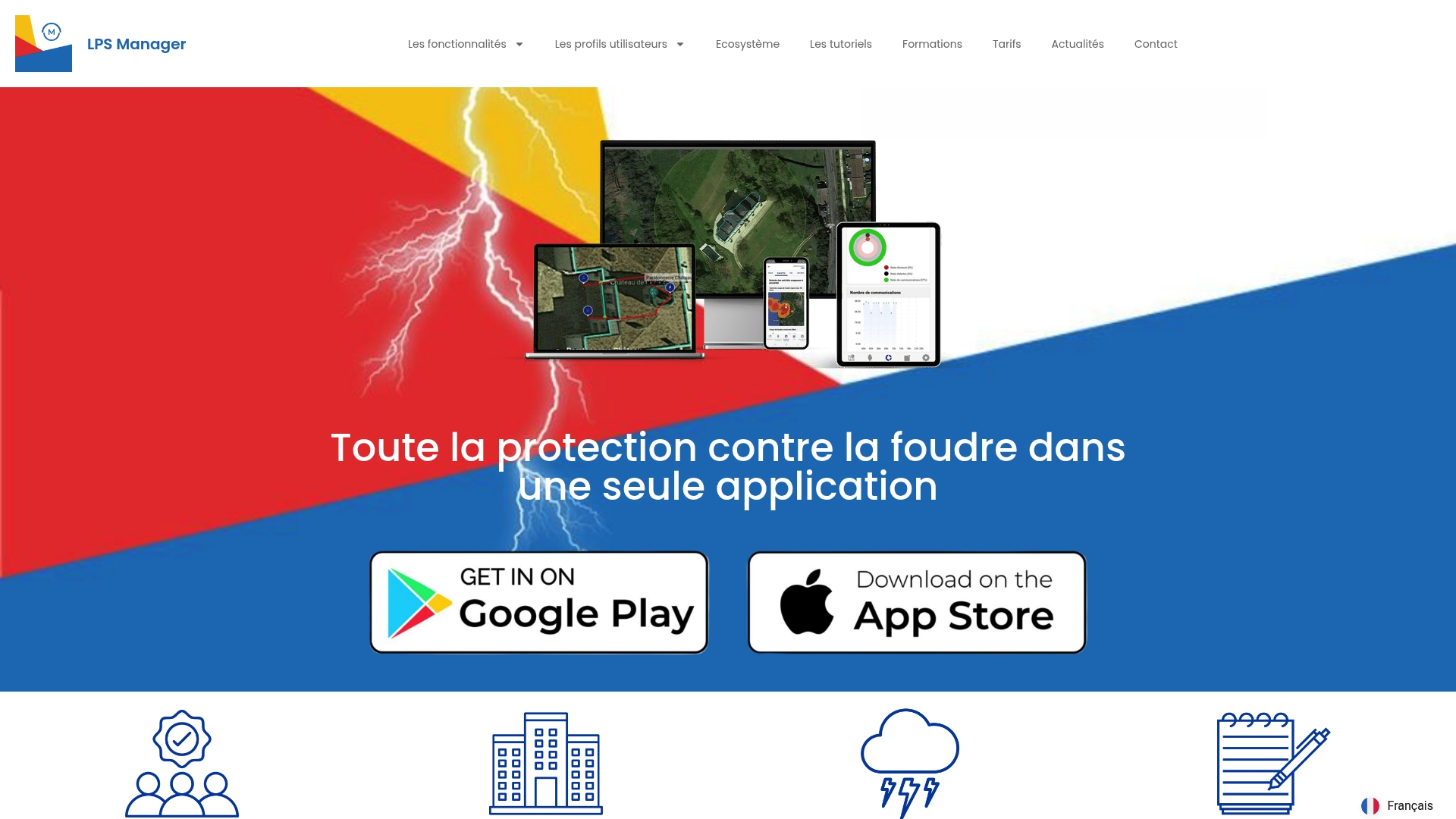
Don't let regulatory or technical complexity hold you back any longer. Discover now how LPS Manager optimizes your compliance and improves your operational efficiency. Take on the challenge of comprehensive and collaborative lightning protection management by visiting our LPS Manager platform to create your first case and benefit from a quick and intuitive onboarding experience.
Frequently Asked Questions
How do I assess the lightning risk for my installation?
It is essential to conduct an accurate lightning risk assessment to ensure appropriate protection. Identify your geographical location and the characteristics of your structure to correctly size your protection system.
What types of surge protectors should I choose for my installations?
The choice of surge protectors depends on your specific context and the level of exposure of your equipment. Select types 1, 2, or 3 based on the sensitivity of your equipment and the architecture of your electrical installation.
How often should I check my lightning protection system?
An annual inspection is the minimum recommended standard to ensure the proper functioning of your lightning protection system. Schedule your inspections for the same month each year to establish a rigorous monitoring framework.
What digital tools can I use to document my lightning protection interventions?
Use a dedicated digital tool to centralize all your lightning protection documentation, including verification reports and inspection photos. This facilitates access to the intervention history and ensures complete traceability.
How can we implement effective weather monitoring to anticipate storms?
Install a real-time weather monitoring service that sends early warnings about nearby storms. This will allow you to take preventative measures to protect your site and equipment before the storms arrive.
Why is it important to collaborate with certified professionals for lightning protection?
Working with certified professionals ensures your installation meets current standards and guarantees your safety. Look for companies with recognized certifications to ensure a high-quality service.
Recommendation
- 7 types of lightning protection you should know to secure your installations
- 7 tips for optimizing lightning protection for industrial sites
- Lightning Protection Installer – LPS Manager
- Lightning protection: Safety and compliance in France
- Elektroinstallation für Neubauten: Sicherheit und Innovation