

You manage the installation or verification of lightning protection systems. But how can you be sure you're acting at the right time in the face of sudden storms or extreme conditions that threaten the safety and compliance of your sites? Without reliable and immediate information, you risk unnecessary interventions, unexpected failures, or even dangerous situations for your team.
The good news: real-time weather monitoring transforms your approach. It allows you to anticipate risks, optimize your interventions, and easily demonstrate compliance with regulatory standards, as recommended by the Sendai Framework for Disaster Risk Reduction. With this approach, you protect your facilities and improve safety on a daily basis.
Discover concrete methods and practical tips to move from reactive to proactive management. You will learn how to leverage every advantage of weather monitoring to better secure your business, save time, and strengthen customer confidence.
Table of Contents
- 1. Reducing weather-related risks
- 2. Optimization of interventions and verifications
- 3. Easier compliance with regulatory standards and obligations
- 4. Improved safety for teams in the field
- 5. Proactive failure prevention through instant alerts
- 6. Centralized management and traceability of meteorological events
Quick summary
| Key message | Explanation |
|---|---|
| 1. Real-time monitoring reduces risks | Receive immediate alerts to anticipate climate hazards and protect your facilities effectively. |
| 2. Optimizing interventions through alerts | Plan your interventions during periods of favorable weather, which minimizes unnecessary travel and maximizes operational efficiency. |
| 3. Improved regulatory compliance | Time-stamped documentation of alerts and interventions facilitates compliance with current safety standards. |
| 4. Safety of teams in the field | Accurate alerts help prevent weather-related accidents and ensure the safety of your staff. |
| 5. Proactive failure prevention | Anticipate failures in your protection systems with appropriate alerts, thereby reducing unexpected maintenance costs. |
1. Reducing weather-related risks
Severe weather poses a growing threat to industrial facilities and lightning protection systems. Real-time weather monitoring is your first line of defense, alerting you before dangerous conditions occur.
Your installation is constantly exposed to climatic hazards such as droughts, floods, cyclones, and extreme temperatures. These phenomena affect the performance of lightning rods and surge protectors, compromising their effectiveness when you need them most.
Climate risk management aims to reduce exposure and vulnerability to protect lives and property.
With real-time alerts, you benefit from immediate responsiveness . As soon as a storm approaches, you receive a notification and can take appropriate action. This proactive approach transforms your risk management process.
Here's how real-time monitoring reduces your risks:
- Early detection of storms and dangerous weather systems
- Instant push alerts to intervene before damage occurs
- Historical events to identify vulnerability patterns
- Emergency score based on the actual conditions at the time
- Time-stamped evidence of preventive measures taken
reactive maintenance to a proactive . Instead of checking your installation after an event, you protect it before it happens. The meteorological data continuously collected around your site gives you complete visibility.
This monitoring also reduces business interruptions. By knowing when conditions will be hazardous, you can schedule critical operations for safe times. For industrial facilities, this means less unplanned downtime.
The Sendai Framework for Disaster Risk Reduction emphasizes improved preparedness and prevention. Real-time monitoring is a direct component of this approach.
Pro tip: Configure your alerts to receive critical notifications by email and standard updates by push, so you don't miss anything important without being overwhelmed with information.
2. Optimization of interventions and verifications
Every day lost due to adverse weather conditions represents additional costs and increased risks to your facilities. Real-time monitoring transforms your planning by basing it on accurate weather data rather than rough estimates.
You probably know that scheduling an inspection without knowing the weather conditions can lead to unnecessary trips. With real-time alerts, you optimize your schedule by scheduling interventions for times when conditions are optimal.
Impact-based forecasting translates weather data into targeted actions, enabling teams on the ground to optimize their responses.
Your team of installers and inspectors gains operational efficiency . Instead of last-minute schedule changes, you have clear visibility into the best days for interventions. This means fewer cancellations, fewer postponements, and better utilization of your teams.
In practical terms, real-time monitoring allows you to:
- Schedule the checks during favorable weather windows
- Avoid stormy periods when working at heights becomes dangerous
- Gather historical data to identify the best times for intervention
- Reduce unproductive travel and wasted time
- Coordinate multiple sites according to local conditions
When you receive an alert indicating improved conditions, you can immediately plan an intervention. Conversely, a critical alert allows you to reschedule without urgency. This strategic flexibility becomes your competitive advantage.
Forecast accuracy has improved significantly. Modern models allow us to anticipate interventions with far greater reliability than older methods. You directly benefit from these technological advances through the alerts integrated into your platform.
For managers of multiple sites, the impact is even more significant. You can synchronize teams across different facilities based on regional weather conditions. This optimizes your overall operational capacity.
Pro tip: Create separate alert profiles for each type of intervention: studying a new installation requires different conditions than a routine check, adapt your alert thresholds accordingly.
3. Easier compliance with regulatory standards and obligations
Regulatory compliance is not optional for installers and inspectors of lightning protection systems. French and European standards (NF C 17-102, IEC 62305) impose strict obligations, and real-time weather monitoring becomes your ally in meeting them without administrative hurdles.
Each verification must be accurately documented and traceable. When you have time-stamped meteorological data, you can justify your decisions and actions to inspectors. This documented evidence transforms your compliance from theoretical to concrete.
ISO standards for occupational safety provide a framework for effectively managing occupational risks while ensuring regulatory compliance. This structured approach applies directly to your lightning protection interventions.
Implementing regulations is essential to ensure safety and demonstrate your commitment to standards.
Your platform automatically records all alerts, weather conditions, and actions taken. This creates a complete audit trail without any additional effort. During a regulatory audit, you immediately have solid, dated evidence.
Here are the obligations that monitoring facilitates:
- Documented annual inspections with contextual weather conditions
- History of alerts and decisions justifying urgent interventions
- Exact dates and times of inspections for compliance reports
- Time-stamped data proving compliance with regulatory deadlines
- Full traceability for external audits and inspections
Lightning protection in France requires meticulous documentation. Real-time monitoring transforms this administrative requirement into a natural process, integrated into your daily workflow.
For classified or critical facilities, the stakes are even higher. Regulatory authorities require proof of continued compliance. You can now provide not only an inspection report, but also a complete history of monitoring conditions.
This approach also reduces the risk of unintentional non-compliance. You never miss a check because an alert reminds you. You can't forget to date your reports since the platform does it automatically.
Pro tip: Configure audit reminders according to your contractual schedules and regulatory requirements, so that each site receives a scheduled verification alert at the appropriate time.
4. Improved safety for teams in the field
Working at height on a lightning rod during an approaching storm? That's a risk you should never take. Real-time weather monitoring becomes your fundamental protection tool by giving your teams complete visibility into dangerous conditions before they strike.
Your installers and inspectors work in exposed environments. Roofs, pylons, and tall structures place them precisely in areas at risk during storms. A push notification indicating the approach of a storm system allows your team to immediately move to safety.
Improving early warning systems is essential to reducing the risk of weather-related accidents. This structured approach puts weather data in the hands of your teams, enabling them to make informed decisions about their safety.
Monitoring and alert systems allow responders to assess the reality of conditions and effectively protect their safety.
Your team is no longer reliant on intuition or past experience. Data-driven give them justified confidence in their decisions to pause or resume work.
In practical terms, real-time monitoring protects your teams by:
- Storm approach alerts before conditions become critical
- Identifying safe windows to continue work with confidence
- Reduction in time spent consulting inaccurate external forecasts
- Documentation of decisions made for meteorological safety reasons
- History of alerts for debriefing and continuous improvement
When an instant weather alert is received, your team knows immediately that the decision to come down from the roof is justified. No hesitation. No debate. The data speaks for itself.
This transparency also reduces internal tensions. No one can dispute a safety decision based on an objective, time-stamped alert. Your HSE managers get the traceability they need.
For fleet managers, this clarifies civil liability. You can prove that you had the technical means to protect your teams and that you used them.
Pro tip: Integrate alert notifications into your work interruption process: as soon as a critical alert arrives, an automatic message notifies the team leader and documents the event.
5. Proactive failure prevention through instant alerts
Waiting for a failure to occur before reacting is costly in terms of downtime and emergency response. Proactive prevention transforms your approach by allowing you to anticipate problems before they compromise your lightning protection systems.
Your lightning rods and surge protectors are constantly subjected to the stresses of extreme weather conditions. Lightning-related overloads, wind damage, and accelerated corrosion caused by humidity gradually weaken your installations. A real-time alert allows you to intervene at the first signs of deterioration.
Early warning and rapid response systems enable early detection of risks and trigger appropriate responses before failures occur.
This shift from reactive to proactive mode makes a fundamental difference to your operations. Instead of spending €10,000 on emergency repairs, you spend €2,000 on scheduled preventive maintenance.
Here's how instant alerts prevent outages:
- Immediate detection of lightning strikes to intervene before progressive degradation
- Extreme weather alerts (high winds, torrential rain) allow for expedited inspections
- Notification of anomalies related to connected products indicating malfunctions
- History of events identifying repeated stress cycles
- Contextual data to justify maintenance interventions to managers
Real-time weather alerts and analytics provide actionable insights that transform your maintenance strategy. You move from inefficient calendar-based maintenance to maintenance based on actual events.
When you receive a lightning strike alert near a site, you can schedule an inspection within 48 hours instead of waiting for the scheduled annual inspection. This responsiveness dramatically reduces the risk of cascading failures.
For critical installations, this approach becomes a competitive advantage. Your customers benefit from continuous protection without unpredictable service interruptions. You demonstrate technological and operational mastery.
The accumulation of historical data also allows us to identify patterns. Some sites receive more impacts, others suffer more wind damage. You adjust your strategy based on these measurable realities.
Pro tip: Integrate your lightning alerts into a maintenance calendar: as soon as a critical alert arrives, automatically create a scheduled inspection task two days later, allowing for a quick response without stressful urgency.
6. Centralized management and traceability of meteorological events
Imagine having to sift through emails, paper notebooks, and scattered files to find out exactly when a storm occurred near a site. Centralized management transforms this administrative nightmare into a coherent system where every event is recorded, time-stamped, and accessible with a single click.
Your facilities are spread across multiple sites, each receiving its own weather data. Without centralization, you lose overall visibility and the ability to identify patterns across your portfolio. A unified platform changes everything.
Centralized data management enables precise traceability of events on a global scale, facilitating analysis and coordination of responses.
Every lightning strike, every critical alert, every emergency response is recorded in a single location. This time-stamped record becomes your irrefutable proof during audits or litigation following an event.
Here's what centralized management actually offers you:
- Complete history of weather events by location and by period
- Correlation between lightning strikes and the condition of your installations
- Consolidated reports showing climate trends on your portfolio
- Documented evidence of each alert received and action taken
- Predictive analytics based on accumulated and reliable data
Weather and product monitoring provides a unified view where weather data and equipment status are linked. You can immediately see how storm conditions affect your protection systems.
When an event occurs, you have the answer to every question. When exactly did the impact occur? What was the weather context? Was there a warning beforehand? What action was taken? The data provides the answers, unambiguously.
For managers of multiple sites, this centralization reveals insights that would be impossible to see otherwise. Certain geographic locations have a greater impact. Certain times of the year are more critical. You adjust your resources based on these measurable realities.
Traceability also boosts your credibility. When faced with a regulatory inspection, you can produce a complete history demonstrating that you had the systems in place and that you took action. This is incomparably more robust than a single report.
Pro tip: Export your alert history monthly to create a trend report: this shows your clients and auditors continuous monitoring, not just one-off intervention.
[The table below summarizes the main benefits and strategies related to the use of real-time weather monitoring for risk reduction, improved response, and compliance with standards.]
| Appearance | Description | Benefits |
|---|---|---|
| Reduction of weather-related risks | Using real-time weather data to identify and anticipate hazardous conditions. | Prevention of business interruptions and material damage. |
| Optimizing interventions | Planning based on accurate weather alerts and forecasts. | Reduction of unnecessary travel and improvement of team efficiency. |
| Compliance with regulatory standards | Archiving of time-stamped data to prove compliance of actions performed. | Facilitates external audits and event traceability. |
| Safety of teams in the field | Integration of weather alerts into operational decision-making processes. | Reduction of risks associated with working in adverse conditions. |
| Proactive failure prevention | Continuous monitoring of phenomena likely to alter the facilities. | Reduction of urgent maintenance costs through preventive actions. |
| Centralized management | Platform for monitoring meteorological events and associated interventions. | Easy access to information and comprehensive analysis for optimal decision-making. |
Optimize safety and compliance with real-time weather monitoring
Faced with the growing risks associated with severe weather and stringent regulatory requirements, it is essential to take proactive measures to protect your facilities against lightning. Real-time monitoring significantly reduces the risk of accidents, allows you to anticipate interventions, and provides turnkey traceability for your audits. With instant alerts and precise weather data, you gain responsiveness, improved safety for your teams, and complete control over your sites.
Discover how the LPS Manager supports you in this operational transition by centralizing the management of your files, automating critical alerts, and facilitating collaboration between stakeholders. Thanks to its advanced features, benefit from a tool designed for regulatory compliance, field efficiency, and multi-site monitoring. Switch now to integrated management that secures your assets and simplifies your audits with LPS Manager
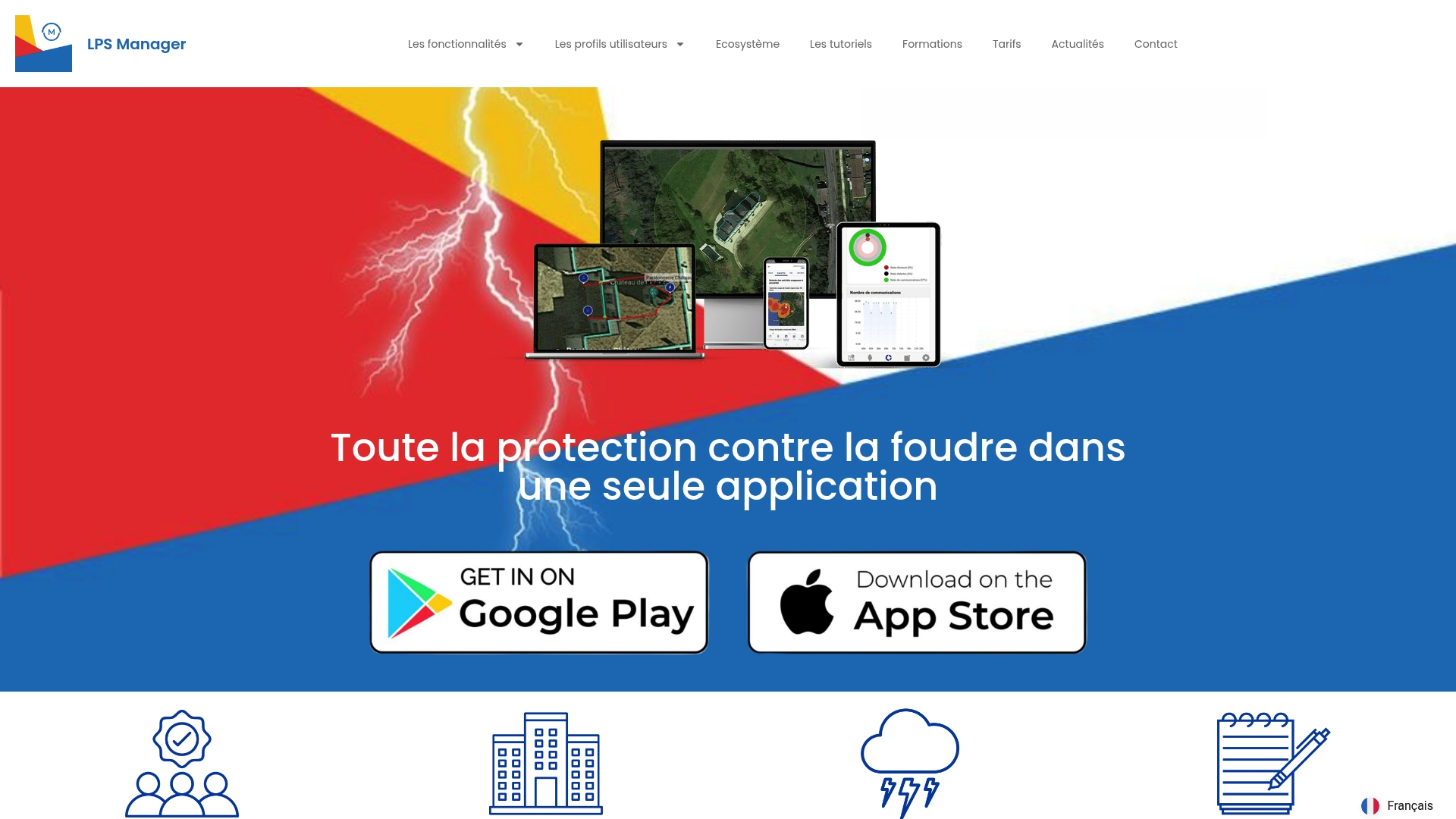
Don't let inclement weather compromise the safety of your facilities any longer. Adopt a winning strategy with real-time weather monitoring and discover all the dedicated solutions on LPS Manager. Start today to manage your risks, optimize your operations, and ensure regulatory compliance.
Frequently Asked Questions
What are the main advantages of real-time weather monitoring?
Real-time weather monitoring offers several key advantages, including reduced weather-related risks, optimized response times, and improved team safety. By integrating this system, you transform your risk management and enhance your facility's responsiveness.
How can real-time weather monitoring improve safety on the ground?
Real-time weather monitoring provides instant alerts about hazardous conditions, enabling your teams to make informed decisions about their safety. To ensure a safe working environment, implement an alert system that notifies your team as soon as a storm approaches.
How does real-time monitoring contribute to regulatory compliance?
Real-time weather monitoring facilitates documentation and traceability, essential for meeting regulatory standards and obligations. Establish a data collection process for each verification, allowing you to demonstrate compliance with clear, time-stamped reports.
What impact does meteorological monitoring have on failure management?
This monitoring allows you to anticipate problems before they occur, thus reducing expenses related to emergency breakdowns. To maximize benefits, configure alerts that trigger preventative inspections as soon as an extreme weather event is detected.
How can I use weather alerts to plan my interventions?
Using weather alerts allows you to schedule your operations during favorable weather windows, thus reducing unnecessary travel. Adjust your teams' schedules based on the forecast to improve their efficiency and avoid work interruptions.
Is it possible to centralize meteorological data from multiple sites?
Yes, centralizing weather data provides a comprehensive overview of conditions across all your sites. Implement a unified platform where all alerts and events can be recorded and analyzed, facilitating strategic decision-making based on accurate data.