


Every site equipped for lightning protection faces a stark reality: storms can strike without warning. In France, meteorological monitoring relies on a network of stations, satellites, and detectors, enabling the anticipation of risks and rapid response. For installers and inspectors, mastering this global meteorological monitoring system inevitably optimizes safety, compliance, and traceability during inspections. This article details concrete methods for combining effective monitoring with regulatory compliance.
Table of Contents
- Definition and objectives of weather monitoring
- Weather data collection tools and systems
- Standards and regulations in France and Europe
- Weather alerts and procedures for installers
- Obligations, responsibilities and related risks
Key Points
| Point | Details |
|---|---|
| Essential Weather Monitoring | Weather monitoring helps to detect storm threats and effectively protect facilities from lightning. |
| Mandatory Regulatory Compliance | Companies must comply with regulations and standards regarding lightning protection to avoid penalties. |
| Structured Alert Procedures | An effective notification system for weather alerts is crucial for responding promptly to dangers. |
| Crucial Documentation and Traceability | Keeping detailed records of checks and alerts strengthens the defense in case of litigation. |
Definition and objectives of weather monitoring
Weather monitoring involves the continuous measurement and recording of atmospheric conditions in a specific geographical area. This activity relies on the quantitative and qualitative observation of meteorological elements such as lightning, wind, rain, and atmospheric electricity.
In the field of lightning protection, this monitoring is of paramount importance. It allows for the identification of risks immediately after they occur and for adjustments to preventive maintenance strategies. You cannot protect what you do not monitor.
The specific objectives of weather monitoring for your facilities are simple but crucial:
- Detect lightning strikes near your protected sites and structures
- Alert your teams in real time when a storm threat is becoming more likely.
- Map potentially damaging climatic events (extreme wind, prolonged drought)
- Justify regulatory compliance to inspectors and auditors
- Trigger checks at the appropriate time, rather than based solely on a schedule.
Passive monitoring versus active monitoring
Passive monitoring involves recording historical data without immediate human intervention. Active triggers instant alerts and corrective actions. In lightning protection, you need both.
Scheduled checks on a fixed date are a thing of the past. The actual impact of weather events requires appropriate management : if a severe storm has hit your site, you must check immediately, not wait three months.
Regulatory compliance and traceability
French regulations (particularly that of October 4, 2010, and its amendments) mandate periodic checks and comprehensive documentation. Weather monitoring provides documented proof of your diligence: it demonstrates that you observed threats, issued alerts, and took action.
This time-stamped traceability becomes essential during ICPE inspections or legal disputes. The absence of visible tracking exposes the operator to penalties.
Integration with connected systems
Modern installations integrate connected products (sensors, smart lightning rods, surge protectors with impact detection). Combined weather and product monitoring provides a comprehensive view: external data (weather) plus internal data (on-site sensors).
This merger eliminates blind spots and improves the accuracy of maintenance decisions.
Weather monitoring does not replace physical verification, it optimizes it by telling you when and why to intervene.
Pro tip: Set up critical alerts (lightning strikes, extreme wind) to receive them via email and instant push notifications. Not waiting for the monthly report allows for a faster and more credible response in the eyes of inspectors.
Weather data collection tools and systems
Meteorological data collection relies on a diverse set of instruments and technologies working together to capture the true state of the atmosphere. Without these tools, you would be navigating blindly in the face of storm threats and lightning risks.
Modern systems combine multiple sources to provide comprehensive and reliable coverage of your intervention sites.
Types of collection instruments
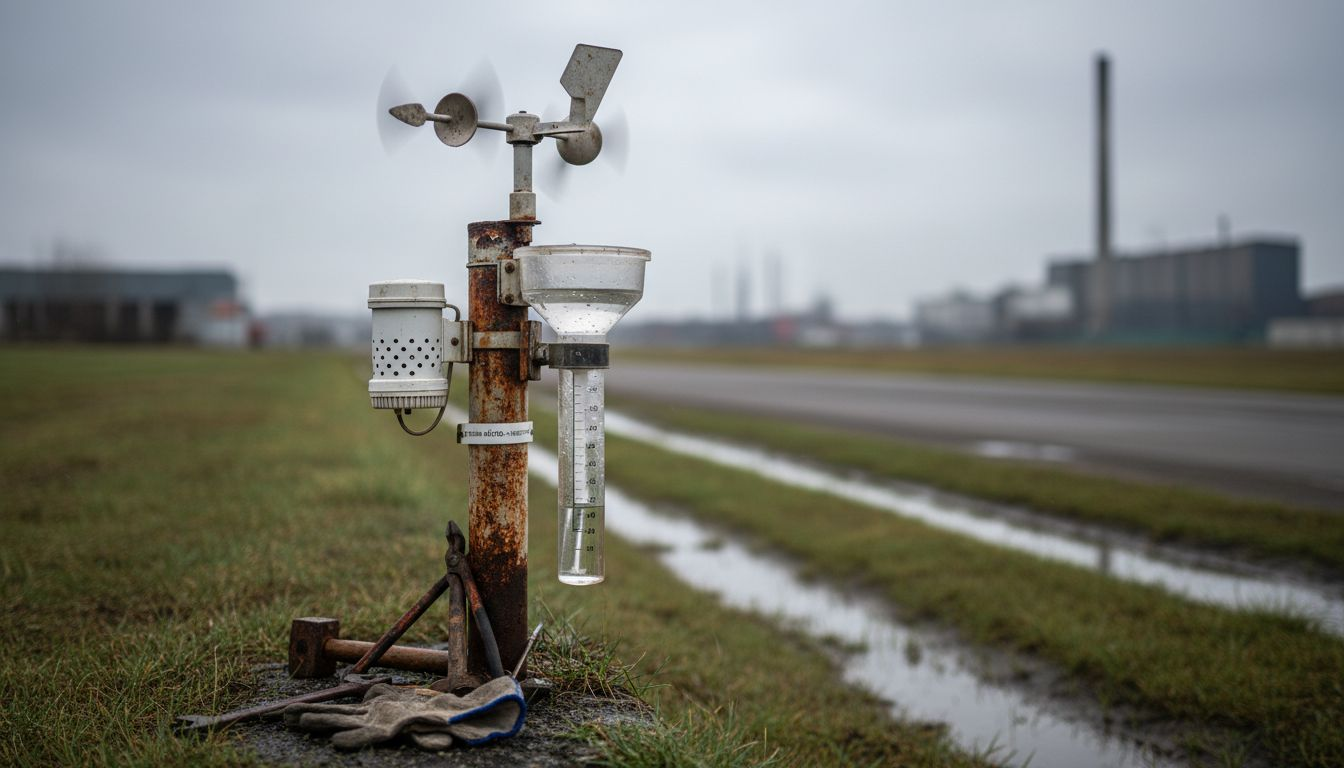
Fixed weather stations continuously measure temperature, atmospheric pressure, humidity, and wind speed and direction . These ground-based installations are essential for accurate local monitoring of weather conditions.
Weather satellites monitor Earth from space, providing a synoptic view of storm systems and their movement. They detect cloud developments and warn of impending threats long before lightning strikes.
Lightning detection sensors ( electromagnetic and optical sensors) record lightning strikes and attempted strikes within a defined radius. These devices provide raw data: location, time, and intensity.
Here is a comparative table of weather data collection instruments and their main uses:
| Instrument | Main function | Job advantage |
|---|---|---|
| weather station | Continuous local measurement of variables | Accurate on-site detection and rapid detection |
| weather satellite | Widespread monitoring of storms and systems | Early warning and anticipation |
| Lightning sensor | Detection of impacts and attempts | Precise location of incidents |
Data management and processing systems
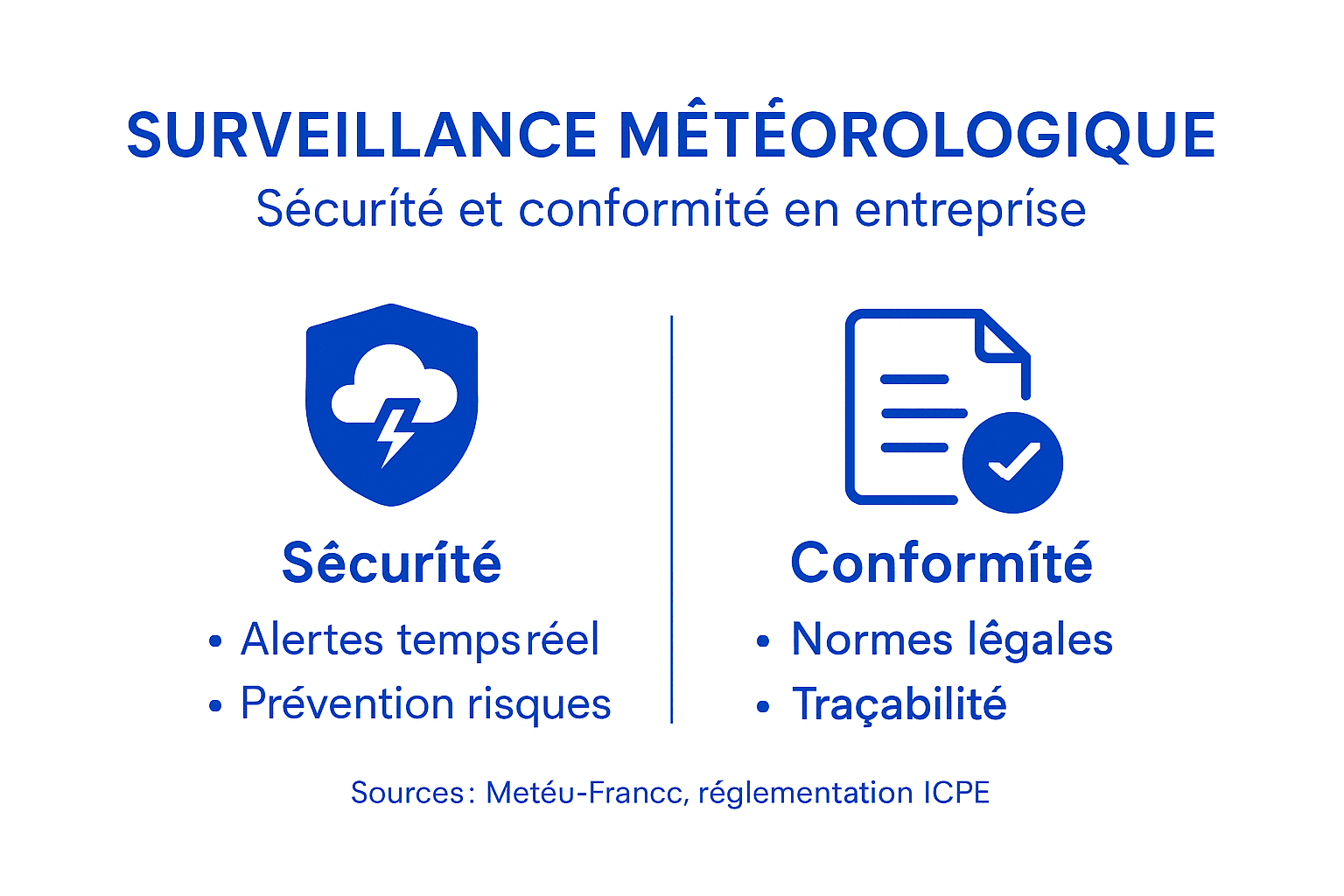
Once collected, the data must be stored, validated, and analyzed in a structured manner . Climate management software, such as specialized systems, allows for automatic import/export from multiple sources, continuous data ingestion from stations, and the generation of usable reports.
This centralization eliminates data silos and ensures a consistent overview.
Real-time versus historical integration
You need both approaches:
- Real-time data : instant alerts when a lightning strike is detected or a storm is approaching
- Historical data : long series (weeks, months, years) to identify trends and justify maintenance decisions
alerts protect your safety by triggering immediate action. The historical data, meanwhile, demonstrates to inspectors that you observed and reacted to events.
Consistency and reliability of sources
Your data must come from recognized and reliable services . National meteorological agencies, certified lightning detection networks, and public satellites offer documented credibility.
A mix of unverified sources compromises the integrity of your monitoring and risks discrediting your case in the event of litigation.
The collection tool is never better than the data it processes: demand transparent and validated sources.
Pro tip: Opt for solutions that automatically aggregate multiple sources (weather + lightning detection + local IoT sensors) into a single dashboard. This reduces manual intervention and synchronization errors between systems.
Standards and regulations in France and Europe
Lightning protection is not optional in France and Europe: it is governed by a strict regulatory framework and harmonized technical standards that apply depending on the type of installation. Ignoring these rules can lead to penalties, operational disruptions, and civil liability.
Your primary obligation is to know the texts that apply to your sites and clients.
French regulatory framework
The decree of October 4, 2010 (as amended) sets out the lightning protection requirements for classified installations (ICPE). It mandates a Lightning Risk Analysis (ARF) to determine if protection is necessary, and a Lightning Technical Study (ETF) to size the system if the ARF requires it.
Periodic checks (usually annual) are mandatory, documented, and tracked. Failure to provide visible follow-up during an inspection results in administrative closures.
This decree applies strictly to installations presenting a risk of fire or explosion related to lightning.
Technical standards: NF C 17-102 and IEC 62305
NF C 17-102 standard (formerly NF C 17-100) transposes the European standard IEC 62305 into French law. It defines:
- Methodology for calculating the required level of protection
- Technical specifications of equipment (lightning rods, surge protectors, grounding systems)
- Design and installation criteria
- Verification and maintenance procedures
The choice between NF C 17-102 and simplified approaches such as FD C 17-108 depends on the complexity of your installation and the applicable regulatory requirements.
National alert procedures: weather vigilance
In France, the Météo-France weather alert system uses a four-color scale (green, yellow, orange, red) corresponding to increasing levels of danger. Severe storms, extreme winds, and other phenomena are included.
Although this procedure is primarily informative for the general public, it is part of your compliance file: it justifies the alerts you received and the actions you initiated.
European harmonization and voluntary standards
standards make it easier to demonstrate compliance with EU law, even though their application is generally optional. They offer a presumption of conformity and reduce the risk of cross-border disputes.
In the EU, the same technical principles apply: ARF, ETF, checks, documented maintenance.
Responsibilities and documentary obligations
You must:
- Keep study, verification and maintenance reports for at least 10 years
- Produce these documents upon administrative or judicial request
- Demonstrate traceability of corrective actions after detection of non-conformities
- Explain that the checks took place and what the result was
Good documentation can save you in the event of a disaster or surprise inspection.
Regulatory compliance is never a cost: it is insurance against penalties and liabilities.
Pro tip: Check annually for updates to the regulations and standards applicable to your geographic area and type of installation. The rules change (e.g., new editions of IEC 62305), and delays in compliance can invalidate your applications with the authorities.
Weather alerts and procedures for installers
As an installer or inspector, you're not just a technician: you're also a key player in the safety chain when facing weather-related threats . Receiving an alert and knowing how to respond makes the difference between effective preventative action and a crisis situation.
Weather alerts require clear, documented and responsive procedures.
Distinction between vigilance and alert
Weather monitoring is a state of alert based on forecasts that encourages you to stay informed and prepare. An alert, on the other hand, is the dissemination of a signal warning of an imminent danger likely to cause direct harm.
In practice, you may receive an orange alert for thunderstorms without any immediate action required. However, a red alert implies an immediate response: cessation of work at height, closure of construction sites, and contact with clients.
To clarify the key differences between weather vigilance and weather alerts, here is a summary table:
| Criteria | Weather alert | Weather alert |
|---|---|---|
| Objective | Prepare and inform | Responding to imminent danger |
| Target audience | General public & professionals | Professionals, site managers |
| Action required | Monitoring, preparation | Interruption, immediate security |
| Example of a trigger | Thunderstorm forecast | Severe thunderstorm detected nearby |
Météo-France weather alert system
Météo-France's weather alert publishes a daily 24-hour alert map with a color code: green (no danger), yellow (alert), orange (danger), red (very high danger).
This map covers severe winds, storms, floods, heat waves, and other weather phenomena. It is intended for authorities and the general public, but you should integrate it into your operational monitoring.
Quick reference procedures for installers
When you receive an alert, your reaction should be structured:
- Verify the source : does it come from Météo-France, an official platform or an IoT/field solution?
- Classify the threat : what types of damage are your facilities at risk (wind, lightning, extreme rain)?
- Notify customers : send the alert immediately with appropriate recommendations
- Document the date/time : timestamp the received alert and the sent notification.
- Plan the verification : schedule a post-event check if a disaster is likely
This traceability becomes your proof in the event of a dispute or inspection.
Integration of real-time alerts
Real-time alerts allow for optimized intervention management : rather than waiting for the annual calendar verification, you trigger an audit immediately after a lightning event is detected or a critical alert is received.
This reduces risks and improves your credibility with inspectors.
Customer communication and responsibility
Your obligation to your clients includes:
- Transmit the alert in a timely manner (ideally within the hour)
- Provide clear advice : close construction sites? Suspend work? Check immediately?
- Suggest a follow-up visit if the event has occurred
- Keep evidence : SMS messages, emails, notification logs, post-alert visit reports
Poor communication can expose you to civil liability.
An alert received but not passed on to the client does not protect you: it is the lack of communication that creates liability.
Pro tip: Set up automatic push and email notifications for your customers as soon as they receive a critical alert, using a pre-written but customizable message template. This eliminates delays and demonstrates a robust alert system.
Obligations, responsibilities and related risks
Weather monitoring is not a commercial option: it is a legal obligation and a personal responsibility that applies to you as an installer or inspector. Neglecting this obligation exposes you to civil, criminal, and administrative penalties.
You need to understand exactly what you risk and what you need to do to protect yourself.
Employer and service provider responsibilities
As an installer or inspection company, you bear direct responsibility for the safety of your teams and clients . The participation of all stakeholders in risk assessment and management is required: you must consult your employees, train them on threats, and inform them of the procedures for responding to alerts.
This responsibility begins before the intervention: it includes planning according to the weather and abandoning work sites if conditions become dangerous.
Documentation requirements and traceability
You must retain and be able to produce on demand:
- Dated and time-stamped verification reports
- Risk assessments (ARF, ETF) for each site
- Alerts received and notifications sent to customers
- your teams' training
- corrective actions following the event
The absence of written records becomes your worst enemy in the event of an accident or inspection. An undocumented incident leads to a presumption of negligence.
Risks of civil and criminal liability
In the event of an accident (death, injury, significant material damage) related to a faulty lightning protection system:
- Civil liability : you compensate the victims (potentially unlimited)
- Criminal liability : you risk prosecution for manslaughter or involuntary injury.
- Administrative responsibility : site closure, ICPE fines, withdrawal of approval
Good weather tracking significantly reduces these risks by proving your diligence.
Worker protection and working conditions
Workers exposed to extreme weather conditions must benefit from assessments and preventive measures : training, appropriate equipment, review of working hours, regular breaks.
If you impose work at height during a thunderstorm without justification or without emergency measures in place, you are directly responsible for the consequences.
Professional liability insurance
Your liability insurance policy should cover claims related to lightning protection. But be aware: insurers often refuse to cover claims resulting from failure to comply with safety procedures or from missing documentation.
Poor traceability can invalidate your coverage.
Customer recourse and litigation
A customer who has suffered damages (building struck by lightning, faulty installation after inspection) can sue you by:
- Damages for breach of contract
- Reimbursement of the repair cost
- Legal fees and late payment interest
Documented weather monitoring will be your best defense: it proves that you observed, alerted, and recommended actions.
Complete documentation protects you three times: before the incident (prevention), during (justification of emergency) and after (proof of due diligence).
Pro tip: Take out enhanced liability insurance that specifically covers lightning protection and includes a legal protection clause. Ask your insurer what supporting documents (traceability, training) they require in the event of a claim, then organize your documentation accordingly.
Optimize weather monitoring to ensure safety and compliance
Weather monitoring is a key element for anticipating and responding effectively to the risks associated with lightning and extreme weather events. Are you looking to improve your ability to detect impacts, provide real-time alerts, and ensure regulatory compliance? It is crucial to have an integrated tool that centralizes your studies, monitoring, and audits while automating the recording of weather and lightning alerts, enabling you to act at the right time.
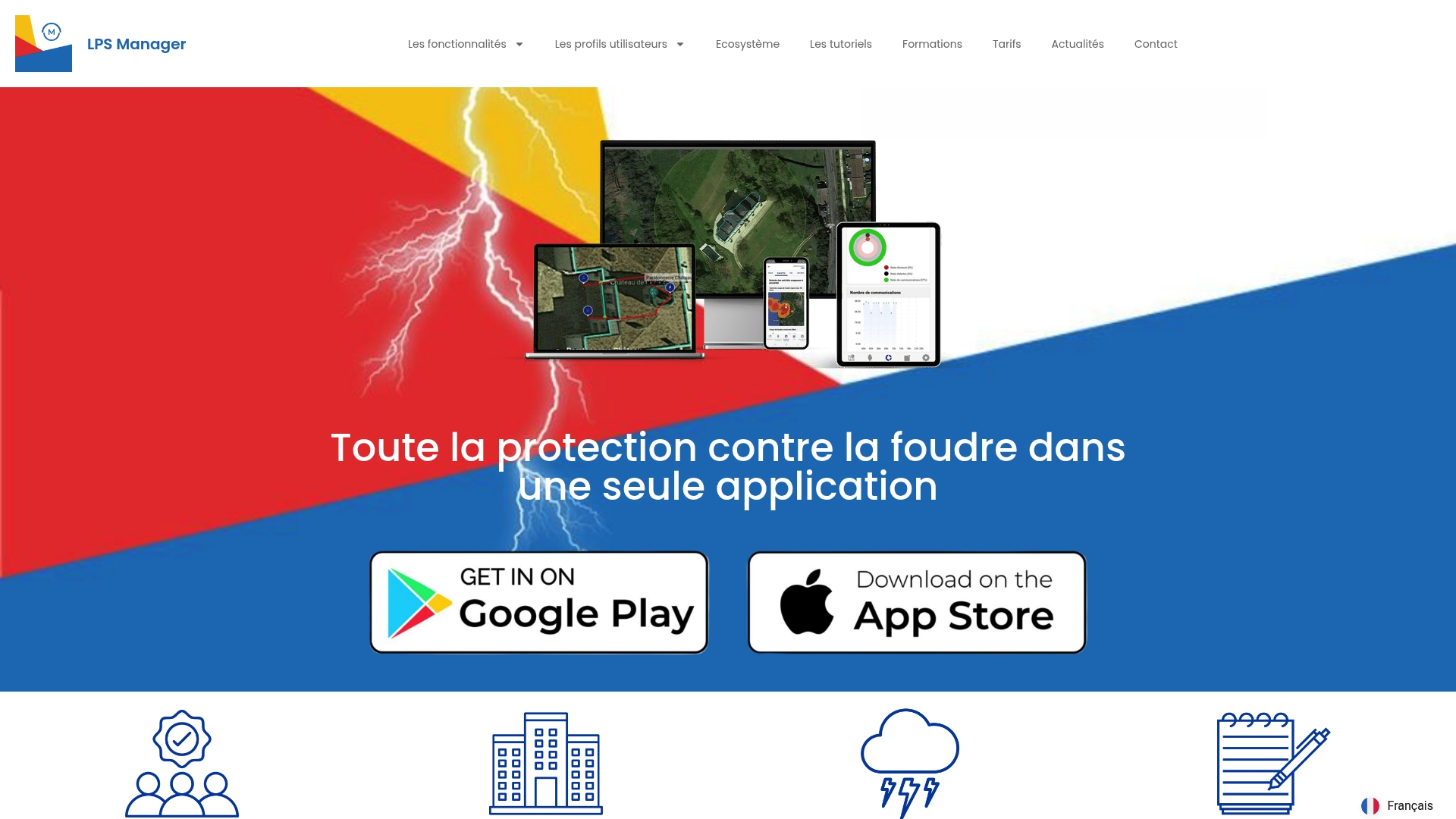
Discover how LPS Manager specifically addresses this challenge:
- Weather monitoring triggered by site geolocation without the need for local sensors
- Instant alerts via validated and time-stamped push notifications and emails for seamless regulatory compliance
- Complete case management : protection studies, audits, verifications, and immediately shareable reports
- Intelligent emergency score that takes into account your facilities and weather events
Don't leave any risk uncontrolled. Take action today to secure your facilities and comply with current standards. To learn more and start effectively managing your lightning protection, visit LPS Manager and stay ahead of weather events.
To learn more: also see weather tracking and lightning protection products and instant weather alerts for security in order to transform the weather into a reliable and practical ally.
Frequently Asked Questions
What is weather monitoring?
Weather monitoring involves continuously measuring and recording atmospheric conditions in a geographical area, including elements such as lightning, wind, and rain.
Why is it important to monitor weather conditions for facilities?
Monitoring makes it possible to detect lightning strikes, to provide real-time alerts about storm threats and to justify regulatory compliance, which is essential to effectively protect facilities against weather risks.
What is the difference between passive and active surveillance?
Passive monitoring records historical data without immediate intervention, while active monitoring sends instant alerts to trigger corrective actions in the event of a threat.
What are the regulatory obligations related to meteorological monitoring?
The obligations include carrying out lightning risk analyses, technical studies, and documented periodic checks, in accordance with the applicable regulatory orders.
Recommendation
- Instant weather alerts: Impact on industrial safety
- Lightning protection: Safety and compliance in France
- Meteorological impact on industrial lightning management
- Historical Weather and Lightning Protection System (2026)
- Daycare laundry storage challenges: safety and standards – VØYA
- Public Safety Screening Explained: Ensuring Integrity
- 7 Essential veiling panels for your door