



Many believe that installing a lightning rod is enough to protect a site. In reality, effective lightning protection relies on a complex combination of devices, standards, and continuous monitoring. Instant alerts play a crucial role in preventing damage and ensuring regulatory compliance. In this article, you will discover how to leverage these alerts to optimize the management of your facilities, ensure compliance, and reduce operational risks using digital tools like LPS Manager.
Table of Contents
- Applicable French and European regulations and standards
- Technical operation of instant alerts
- Operational integration of alerts into business management
- Common misconceptions and errors in managing lightning alerts
- Case studies and recommendations for French professionals
- Conclusion and future prospects
- Discover lps manager solutions for lightning protection
Key points to remember
| Point | Details |
|---|---|
| Instant alerts | They combine geolocated weather data, compliance with IEC 62305 and NFC 17-102 standards and digital tools for effective monitoring. |
| French regulations | Requires lightning risk analysis and mandatory periodic checks depending on the type of establishment. |
| Digital technologies | Platforms like LPS Manager optimize management, traceability and collaboration between installers and verifiers. |
| Multi-site management | AI-powered smart scores facilitate prioritization of interventions and preventive maintenance. |
| Common misconceptions | Underestimating the complexity of the complete system is detrimental to safety without an integrated approach. |
Applicable French and European regulations and standards
Lightning protection in France is based on a strict regulatory framework. The IEC 62305 and NFC 17-102 standards define the technical requirements for designing, installing, and verifying protection systems. These standards cover all aspects, from calculating the level of protection to implementing down conductors and grounding systems.
The decree of October 4, 2010, and its amendments, require operators of classified installations (ICPE) to conduct a Lightning Risk Analysis (ARF). If the analysis reveals a significant risk, a Lightning Technical Study (ETF) becomes mandatory. For establishments open to the public (ERP) and high-rise buildings (IGH), periodic inspections are required according to defined schedules. These inspections ensure that the systems remain compliant and functional.
Grounding is the fundamental element of any protection system. Inadequate ground resistance compromises overall effectiveness. Correctly configuring surge protectors also requires careful attention to ensure they trip at the right time. Poor grounding or incorrect configuration can lead to a denial of compensation after an incident, highlighting the crucial importance of technical compliance.
The legal and financial consequences of non-compliance extend far beyond fines. In the event of an incident, insurers meticulously examine the conformity of installations. Failure to meet standards can invalidate coverage and expose operators to significant civil liabilities. Regular, documented inspections therefore provide both legal and technical protection.
The obligations vary depending on the nature of the establishment. Industrial facilities with pyrotechnic or explosive risks are subject to increased monitoring. Sites storing hazardous materials must comply with particularly strict protocols. This regulatory diversity requires a customized approach for each type of facility.
Technical operation of instant alerts
Instant alerts rely on a sophisticated system for collecting and analyzing meteorological data. Contrary to popular belief, no local sensors are required on-site. Precise geolocation of the file automatically triggers monitoring of atmospheric events in the affected area. The digital platforms aggregate data from internationally recognized meteorological services known for their reliability.
This approach offers several major advantages. It eliminates the installation and maintenance costs of physical sensors. Geographic coverage becomes comprehensive, even for remote sites. Consolidated weather data provides greater accuracy than local spot measurements. Real-time updates ensure optimal responsiveness to imminent threats.
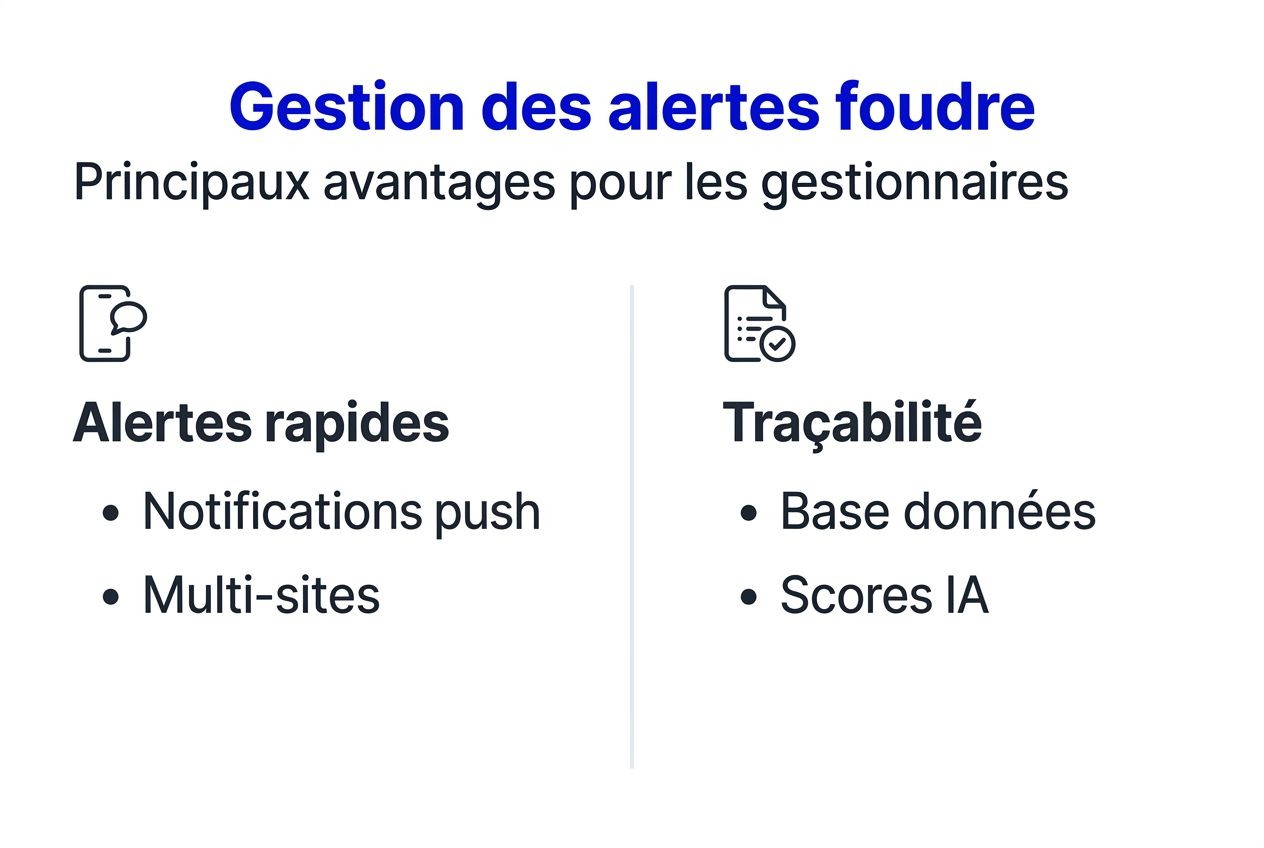
Alerts are categorized by criticality level. Push notifications via the mobile app are the preferred channel for standard alerts, allowing for quick review during business hours. Critical alerts automatically trigger email notifications to ensure immediate delivery, even outside of normal business hours. Each alert is time-stamped and logged, creating a complete history that can be accessed at any time.
Integration with IoT devices significantly enhances the relevance of alerts. On-site connected products transmit real-time data on the status of protection devices. In the event of a direct lightning strike, these sensors instantly detect the event and alert those in charge. This synergy between external weather data and on-site measurements provides a comprehensive view of the situation.
Historical data tracking is a key asset for traceability. Each alert generated feeds into a database that can be searched by period. Professionals can then analyze storm activity patterns, identify high-risk periods, and optimize their maintenance schedules. This data-driven approach allows them to anticipate rather than simply react.
The system's reliability depends on a stable internet connection. Storm alert and detection functionalities require continuous access to meteorological data streams. In constrained environments, a delayed synchronization strategy can be implemented to ensure service continuity.
Operational integration of alerts into business management
Digital tools like LPS Manager are radically transforming the day-to-day management of lightning protection. Centralizing files on a secure platform eliminates document fragmentation. Each site has its own dedicated space containing plans, verification reports, alert history, and communication channels between stakeholders. This structured organization facilitates access to information and significantly reduces search times.

The verification workflow becomes seamless and traceable. In the field, technicians collect photos, measurements, and observations directly in the mobile app. Back at the office, they finalize the report in just a few clicks. The automatically generated PDF document integrates all the collected data in a standardized format. Sharing is instantaneous via a web URL, allowing clients to access the report without installing the app.
The integrated professional directory solves a major challenge in the industry. Quickly identifying a qualified installer or certified inspector in a given region traditionally takes a significant amount of time. Searching by specialty, location, and certifications considerably speeds up the process. Secure messaging linked to project files facilitates coordination among all stakeholders.
Multi-site management becomes truly effective thanks to personalized alerts. Each facility has specific parameters based on its criticality, location, and risk level. Managers receive aggregated notifications, allowing them to prioritize interventions. Concise dashboards provide an instant overview of the entire facility portfolio.
AI-powered smart scores represent a major innovation. The algorithm continuously analyzes installation parameters, lightning event history, weather conditions, and data from connected sensors. The resulting score, expressed as a percentage, summarizes the theoretical state of the protection system. This quick assessment guides preventive maintenance decisions.
Pro tip: Enable push notifications on all your mobile devices and set up automated reminders for periodic checks. This double layer of security ensures that no critical alert goes unnoticed, even during busy periods. Regularly test alert reception to verify that the system is working correctly.
Common misconceptions and errors in managing lightning alerts
The most common mistake is to consider the lightning rod as a standalone solution. In reality, an effective protection system necessarily includes risk analysis, lightning arresters, down conductors, grounding, and surge arresters. Each component plays a specific role in dissipating lightning energy. Neglecting even a single element compromises the entire system.
The absence or delay in periodic inspections exposes you to major risks. Standards mandate regular checks to detect corrosion, loose connections, or other damage. A lightning rod that appears intact may have lost its effectiveness due to repeated strikes. Only a thorough professional inspection can identify these hidden defects.
The confusion between generic weather data and precise local alerts leads to inappropriate behavior. Regional weather reports cover areas too large to guide operational decisions. Geolocation-based alerts offer incomparably greater granularity. A severe storm can strike one site while sparing a facility located a few kilometers away.
Many managers underestimate the importance of documentation. In the event of a claim, insurers require proof that regulatory checks were carried out according to the established schedule. The absence of a traceable history seriously jeopardizes the chances of compensation. Digitizing reports ensures their preservation and immediate accessibility.
Pro tip: Formalize your maintenance procedures in a reference document accessible to all stakeholders. Clearly define responsibilities, inspection frequencies, and alert thresholds that trigger emergency intervention. This standardization prevents oversights and ensures operational continuity, even during team changes.
Case studies and recommendations for French professionals
Managers of multi-site facilities particularly benefit from configurable automatic alerts. Each installation receives customized parameters based on its nature, environment, and criticality level. An industrial site classified as an ICPE (Installation Classified for Environmental Protection) will be subject to stricter monitoring than a standard logistics warehouse. The platform aggregates all alerts in a single interface, facilitating a comprehensive overview.
The frequency of inspections must be adapted to the specific constraints of each site. A complete initial inspection is required immediately after installation or when taking over the management of an existing site. For standard installations in mildly aggressive environments, an annual inspection is generally sufficient. Sites exposed to marine corrosion, industrial pollution, or subject to frequent lightning strikes require inspections every six months or even three months.
Leveraging AI scores transforms reactive maintenance into a predictive approach. A gradually decreasing score signals slow degradation requiring planned intervention. A sharp drop in score after a severe storm triggers an emergency inspection. This intelligent prioritization optimizes the allocation of technical and budgetary resources.
| Type of alert | Preferred channel | Response time | Recommended action |
|---|---|---|---|
| Nearby storm | Mobile push notification | 1 hour | Increased surveillance |
| Direct impact detected | Email + Push | 30 minutes | Visual inspection |
| Critical score | Email + Phone | Immediate | Emergency intervention |
| Preventive maintenance | Push | 48 hours | Visit planning |
Best practices for installers include several key points:
- Photograph each step of the installation systematically to create a complete record.
- Measure and document earth resistance before and after work with a calibrated tellurometer.
- Check the electrical continuity of all conductors with a precision ohmmeter.
- Provide the client with a detailed report including diagrams, measurements and maintenance recommendations.
- Configure alerts immediately in the management platform to activate monitoring.
Inspectors must pay particular attention to connection points. Corrosion of equipotential bonding is the most frequent failure. Visual inspection must always be supplemented by instrumental measurements. Infrared thermography detects abnormal heating, revealing degraded connections.
Safety and compliance rely on a systematic approach. Every intervention must be documented in a time-stamped and digitally signed report. Complete traceability of operations legally protects all parties involved. Modern digital platforms guarantee the integrity and long-term preservation of these essential documents.
Conclusion and future prospects
Instant alerts are a cornerstone of modern lightning protection. They bridge the gap between theoretical monitoring and practical operational management. Regulatory compliance is no longer limited to occasional checks but is part of a continuous monitoring process. Professionals now have tools that allow them to anticipate risks rather than suffer the consequences.
Adopting integrated platforms like LPS Manager is becoming a strategic necessity. The fragmentation of information across paper files, emails, and spreadsheets is a major obstacle to efficiency. Digital centralization ensures immediate access to critical data and facilitates collaboration among all stakeholders. This digital transformation of the sector simultaneously improves security and productivity.
Future developments point towards even deeper integration of IoT technologies. Communicating sensors will proliferate on critical infrastructure, enhancing the accuracy of alerts. Artificial intelligence will refine its predictive algorithms by leveraging ever-increasing volumes of data. International standards will evolve to incorporate these new monitoring capabilities.
Regulatory requirements are likely to become more stringent in the coming years. The European Union is progressively harmonizing protection standards. French authorities are intensifying their inspections of classified facilities. Anticipating these changes by adopting best practices now ensures the long-term viability of protection systems and operational stability.
Discover lps manager solutions for lightning protection
Do you manage lightning protection systems and want to optimize your compliance? LPS Manager offers a complete lightning protection solution integrating instant alerts, document management, and collaboration between stakeholders. The platform centralizes all your files, automates the management of checks and audits , and generates standards-compliant reports in just a few clicks. Real-time lightning alerts, configurable according to your personalized thresholds, allow you to anticipate risks. The professional directory and integrated messaging facilitate networking and secure communication. Try LPS Manager today to transform your lightning protection management.
FAQ
How are alerts generated without local sensors?
The alerts rely on the precise geolocation of the case, which automatically triggers the collection of meteorological data from recognized international services. This aggregated data covers the entire territory with fine granularity, without requiring any physical equipment on site.
What is the ideal frequency for checks after an alert?
Following a severe storm warning or direct impact detection, a visual inspection is required within 48 hours. If the IA score drops significantly or if visible damage is observed, a full inspection by a qualified professional must be carried out within 72 hours.
Can alerts be managed for multiple sites within a single platform?
Yes, modern solutions like LPS Manager allow for the centralized management of dozens or even hundreds of sites. Each installation has customized alert settings, and aggregated notifications facilitate the prioritization of interventions based on criticality.
What mistakes should be avoided in the daily management of alerts?
Never ignore a critical alert, even if the site appears undamaged on the surface. Avoid relying solely on regional weather reports, which lack local accuracy. Do not neglect systematic documentation of every intervention; this constitutes your legal protection in the event of a disaster.