


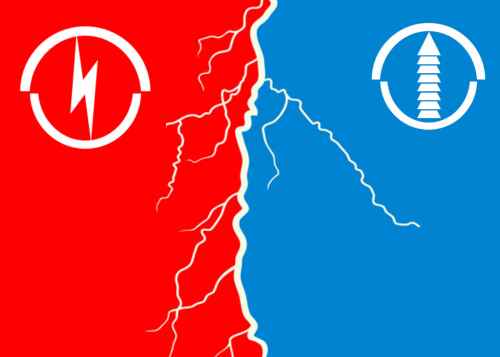
Lightning rods and surge protectors are lightning protection devices that have different functionalities in the face of the lightning strike phenomenon.
The lightning rod:
The lightning rod protects structures against direct lightning strikes.
A lightning rod is the equipment placed on the outside at the highest point of a structure.
The lightning rod's function is to capture lightning strikes that are likely to directly hit the structure it protects.
The External Lightning Protection Installation consists of a sensor called a lightning rod, at least one conductor and a dedicated ground connection for each conductor.
The grounding points must be connected together, as well as all nearby metal masses.
The Outdoor Lightning Protection System captures, conducts and channels the electrical current from lightning into the ground.
The lightning arrester:
The lightning arrester protects against the indirect effects of lightning strikes.
A surge arrester is the equipment placed inside a structure on networks that carry electricity (energy, communications, data…).
The purpose of a surge protector is to prevent overvoltages in the network it protects.
The Indoor Lightning Protection Installation consists of one or more surge arrester systems.
Surge protectors act like switches. They close their circuit when a surge occurs on the network and divert the current to the ground connection.
The Indoor Lightning Protection System conducts and dissipates overvoltages and currents into the electrical grounding system.
The LPS Manager guides you in choosing the lightning rods and surge protectors to use for your lightning protection system. Learn more