


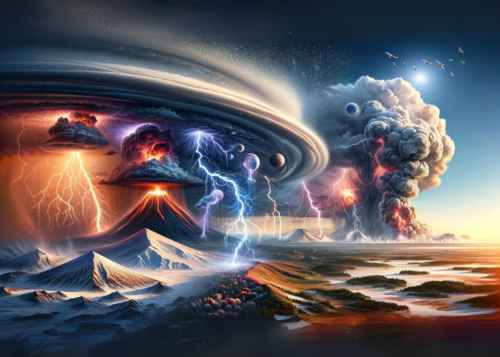
Lightning and thunder are among nature's most impressive spectacles, illustrating the power of Earth's atmosphere. These electrical phenomena aren't limited to classic thunderstorms; they can occur in a variety of weather conditions. Here's a closer look at the main types of phenomena where lightning and thunder can be observed.
1. Thunderstorms
Thunderstorms are the most common setting for observing lightning. These storms form when warm, moist air rises in an unstable atmosphere. As this air rises, it cools and condenses, forming dense storm clouds. Internal air movements within the clouds create separate electrical charges, leading to lightning when an electrical discharge occurs between opposite charges within the cloud, or between the cloud and the ground. Thunderstorms can vary in intensity, from minor local storms to massive supercells, the latter being particularly known for their ability to produce frequent and powerful lightning flashes.

2. Rights
A derecho is a large, linear storm system characterized by a destructive gust front. While the primary feature of a derecho is strong winds, lightning is also common within these systems. Derechos often consist of several clustered thunderstorms, each capable of producing lightning.

3. Snowstorms (Thundersnow)
Much rarer, lightning can also occur during heavy snowstorms. This phenomenon, known as "thundersnow," happens under conditions similar to those of thunderstorms, but with temperatures well below freezing. The combination of cold air at the surface and warm air aloft can create enough instability to trigger lightning.
4. Volcanic eruptions
During major volcanic eruptions, lightning can frequently illuminate the ejected ash plume. These "volcanic thunderstorms" occur when electrically charged ash particles rub against each other in the atmosphere, to a degree similar to the charge generated in thunderstorm clouds.
5. Forest fires
Large forest fires can generate enough heat to create a thunderstorm-like phenomenon called a pyrocumulus, or "fire cloud." These clouds can rise very high into the atmosphere, and sometimes electrical charges develop enough to trigger lightning, which can in turn cause new fires.

6. Dust/Sandstorms
In rarer cases, lightning can also be observed during large dust or sandstorms. These storms can electrically charge sand or dust particles through friction, occasionally leading to electrical discharges in the form of lightning.
Conclusion
Lightning and flashes of lightning are not exclusive to thunderstorms; they can appear in a surprising range of weather phenomena. Each of these events offers a unique perspective on the complex dynamics of our atmosphere and the energetic processes taking place above our heads. Understanding these phenomena not only enriches our appreciation of the natural world but also helps improve weather forecasting and public safety.
