
Each installation in France presents specific challenges in the face of direct and indirect effects of lightning, the consequences of which can be devastating to people and property. For installers, mastering regulatory compliance and integrating digital solutions becomes essential to optimize safety and technical management of systems. Discover how an approach based on scientific understanding and intelligent use of digital tools makes it possible to adapt each protection device to the local environment while complying with French and European standards.
Table of Contents
- Definition and principles of lightning protection
- Main available protection devices
- Standards and regulations applicable in France
- Legal obligations of installers and owners
- Risks related to lack of protection
- Common errors and compliance solutions
Key Points
| Point | Details |
|---|---|
| Lightning Protection | Setting up an effective protection system is based on the principles of capturing, channeling and dissipating electrical energy. |
| Standards and Regulations | Comply with standards NF C 17-102 and EN 62305 to ensure compliance and safety of installations. |
| Installer Obligations | Installers must possess professional certification and complete documentation of interventions. |
| Risks without Protection | The lack of protection exposes infrastructure to risks such as material damage, injuries and significant economic losses. |
Definition and principles of lightning protection
Lightning protection is a set of devices and scientific methods designed to protect people, buildings and infrastructure against the potentially devastating effects of atmospheric electrical discharges. These systems are based on a thorough understanding of the physical mechanisms of lightning.
The fundamental principles of lightning protection revolve around three essential axes:
- Capture: Interception of the electrical discharge by a specific device (lightning rod)
- Channeling: Safe guidance of electrical current
- Dissipation: Current flow to ground without damage
In practice, lightning protection uses several technical equipment, including:
- Lightning rods: Capture devices located at height
- Conductors: Metal cables to guide the current
- Grounding system: Final point of electrical dissipation
Effective protection requires a systemic approach, integrating interconnected components to ensure maximum safety.
French and European standards, particularly standard NF C 17-102, define precise rules for designing and installing these systems. Each installation must be subject to a specific risk analysis, taking into account the environment, structure and protection objectives.
Pro tip: Systematically have a personalized diagnosis carried out by a certified professional before any lightning protection system installation.
Main available protection devices
Lightning protection devices are essential to secure infrastructure and people against electrical hazards. These complex systems include several interconnected technical components that work together to prevent and manage potential impacts.
The main protection devices can be classified into four main categories:
- Single rod lightning rods: Vertical capture devices
- Mesh cage lightning rods: Integral surface protection
- Initiation devices (ESE): Advanced detection technologies
- Grounding systems: Safe dissipation of electrical energy
Each type of lightning rod has specific characteristics adapted to different environments:
Here is a comparative table of lightning protection devices according to their use and effectiveness:
| Device | Ideal Environment | Main Advantages | Limitations |
|---|---|---|---|
| Single rod lightning rod | Isolated buildings | Quick installation, moderate costs | Limited protection |
| Mesh cage lightning rod | Large industrial sites | Complete coverage, high safety | Complex assembly |
| Initiation device (ESE) | High-risk areas | Advanced detection, short response time | Higher price |
| Stretched wires | Extended horizontal surfaces | Adaptability, targeted protection | Requires load-bearing structures |
- Single rod lightning rod: Ideal for isolated structures
- Cage lightning rod: Recommended for large industrial buildings
- Stretched wires: Suitable for large horizontal surfaces
The quality of installation and regular maintenance determine the effectiveness of the lightning protection system.
French standards NF C 17-102 and European standards IEC 62305 define precise rules for the installation and verification of these devices. Each system must be designed according to a specific risk analysis of the site, taking into account its topography, environment and safety issues.
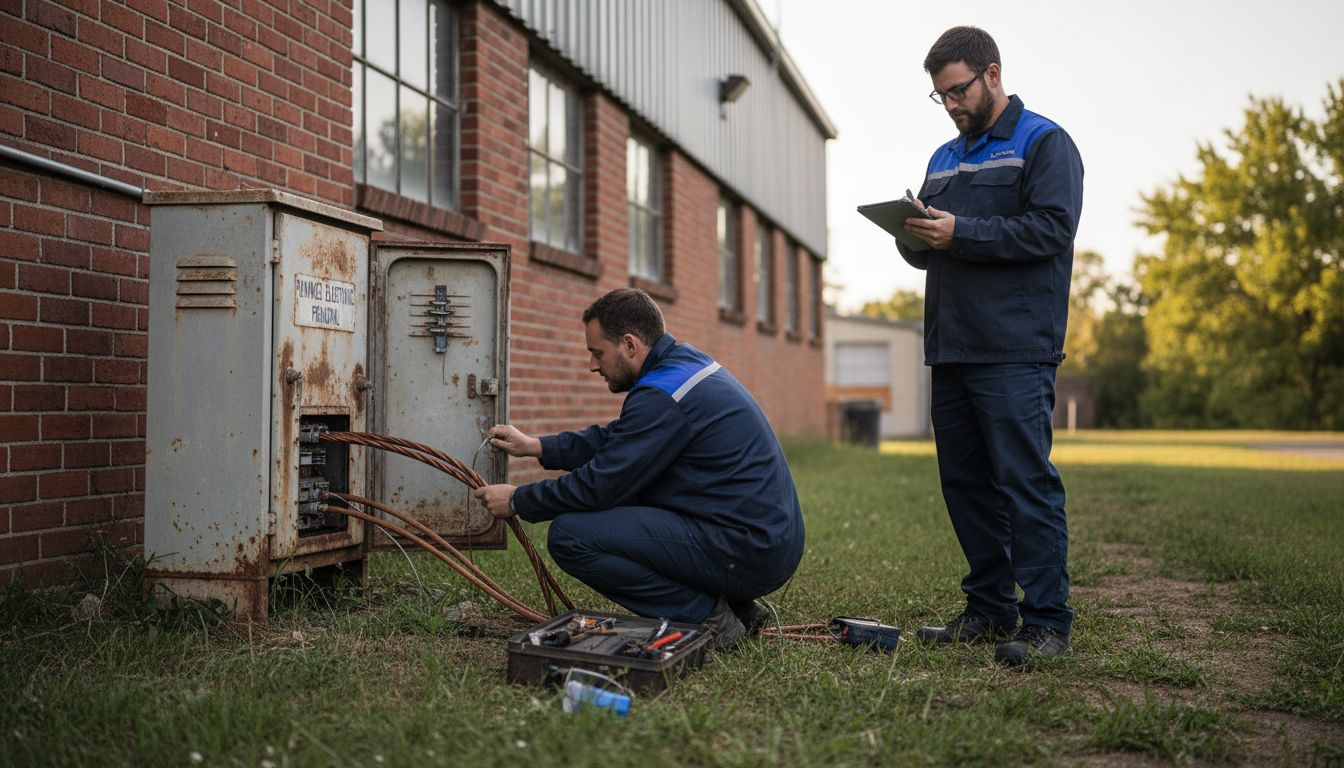
Pro tip: Systematically conduct a precise technical study before installation to ensure optimal protection of your infrastructure.
Standards and regulations applicable in France
Lightning protection in France is governed by a set of strict standards and regulations aimed at ensuring the safety of people and infrastructure. French legislation is based on precise European standards to define technical requirements and prevention measures.
The main applicable standards include:
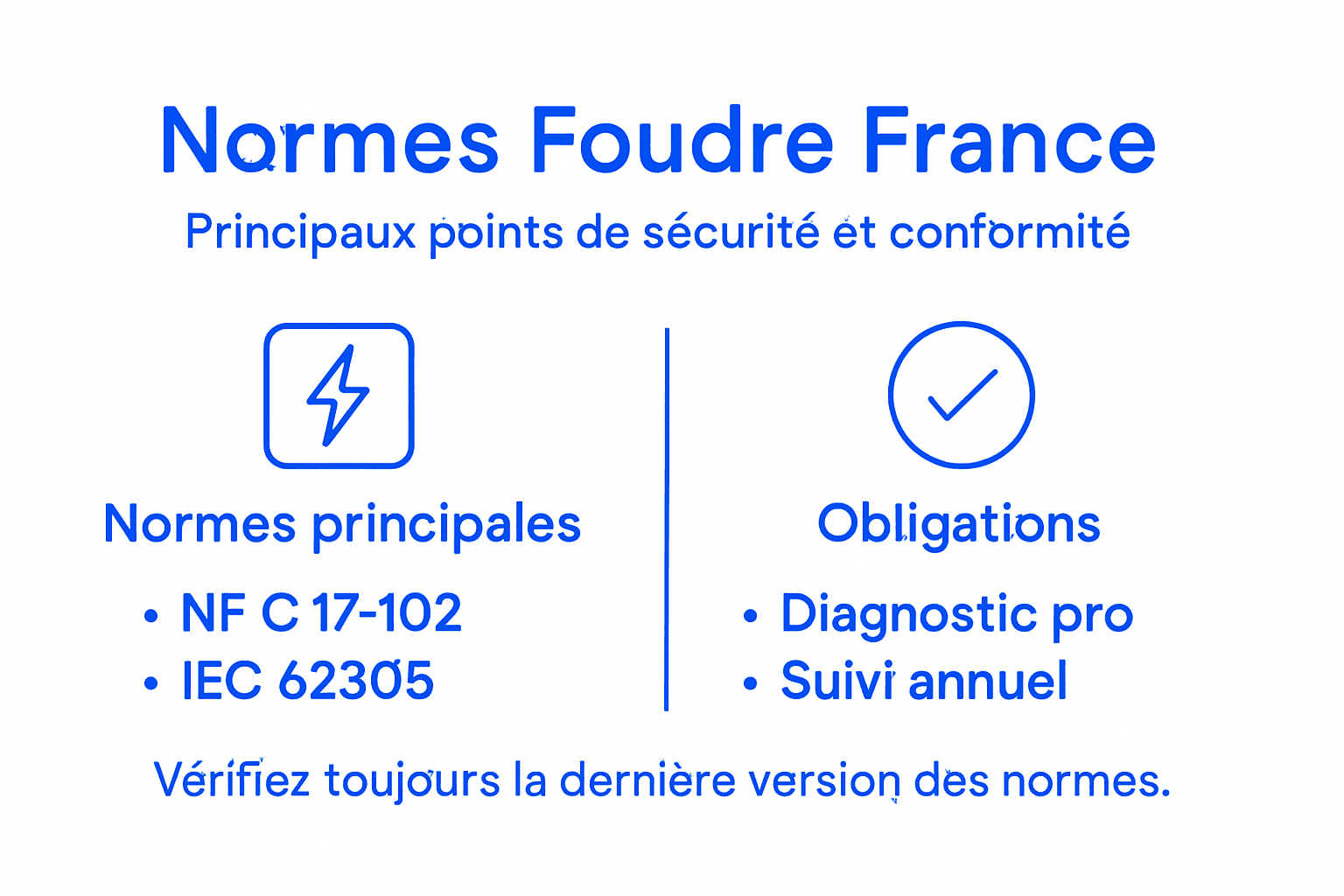
- NF C 17-102: French standard specific to lightning protection
- EN 62305: Reference European standard
- IEC 62305: International protection standards
- Decree of October 4, 2010: Specific regulations for classified installations
Regulatory obligations vary depending on the type of installation:
- Industrial installations: Lightning risk analysis (ARF) mandatory
- Public buildings: Periodic verifications required
- Sensitive sites: Enhanced protection standards
Regulatory compliance is not an option, but a legal security obligation.
Each installation must be subject to a precise risk assessment, with the implementation of appropriate technical devices. The main requirements include:
- Conducting a lightning risk analysis (ARF)
- Installation of systems compliant with standards
- Periodic verifications and regular maintenance
- Documentation and traceability of interventions
Pro tip: Always consult a lightning protection expert to ensure full compliance of your installations with French regulatory standards.
Legal obligations of installers and owners
Installers and owners of lightning protection systems are subject to a strict set of legal obligations aimed at ensuring safety and compliance. Maintenance and periodic verification are essential elements of these regulatory responsibilities.
For installers, the main obligations include:
- Professional certification: Demonstrate required technical skills
- Regulatory compliance: Follow standards NF C 17-102 and EN 62305
- Documentation: Establish detailed installation reports
- Traceability: Keep evidence of intervention
For owners, legal responsibilities include:
- Initial risk analysis: Conduct a complete technical study
- Periodic verifications: Schedule annual inspections
- Standards compliance: Keep the installation in compliance
- Documentary archiving: Keep verification reports
Negligence can result in legal penalties and compromise the safety of property and people.
Obligations vary depending on the type of installation:
- Industrial installations: Enhanced constraints
- Public facilities: Stricter safety standards
- Sensitive sites: Additional technical requirements
Pro tip: Establish a rigorous follow-up protocol and carefully preserve all documents relating to your lightning protection systems.
Risks related to lack of protection
The lack of lightning protection exposes people and infrastructure to major and potentially catastrophic risks. The consequences can be devastating both in human and material and economic terms.
The main risks can be classified into several categories:
- Physical risks: Electrocution and bodily dangers
- Material risks: Destruction of electronic equipment
- Structural risks: Damage to buildings and infrastructure
- Economic risks: Business interruption and financial losses
Potential impacts are multiple and may include:
- Fires: Triggering of fires by electrical surges
- Electronic destruction: Damage to computer systems
- Industrial disruptions: Production stoppages
- Human risks: Electrocution and burn hazards
A single lightning strike can cause damage estimated at several hundred thousand euros.
For different types of installations, risks vary:
This table summarizes major risks related to lack of lightning protection depending on the type of installation:
| Type of Installation | Human Risk | Material Impact | Economic Consequence |
|---|---|---|---|
| Industrial site | Serious injuries during accidents | Machine stoppage, data loss | Decreased revenue, costly repairs |
| Critical infrastructure | Danger to operators | Failure of vital systems | Public service degradation |
| Tertiary building | Risk of staff electrocution | Degradation of electrical equipment | Extended service restoration time |
| Public facility | Endangerment of occupants | Destruction of sensitive installations | Temporary closure of facility |
- Industrial sites: Massive production losses
- Critical infrastructure: System failures
- Tertiary buildings: Equipment destruction
- Public facilities: Dangers to occupants
Pro tip: Conduct a precise analysis of the specific risks at your site to assess potential threats and implement an appropriate protection strategy.
Common errors and compliance solutions
Compliance with lightning protection requirements requires meticulous attention and a thorough understanding of regulatory requirements. The most frequent errors can seriously compromise safety and expose infrastructure to significant risks.
The main common errors in lightning protection include:
- Underestimating risks: Neglecting detailed risk analysis
- Non-compliant installation: Lack of knowledge of technical standards
- Insufficient maintenance: Absence of periodic checks
- Incomplete documentation: Defective traceability of interventions
To ensure optimal compliance, several solutions can be implemented:
- Lightning Risk Analysis (ARF): Exhaustive and precise completion
- Continuous training: Regular updating of technical skills
- Periodic verifications: Systematic annual inspections
- Rigorous documentation: Complete archiving of reports
Compliance is not a goal, but a continuous process of improving safety.
Each type of installation requires a specific approach:
- Industrial sites: Enhanced technical requirements
- Public facilities: Strict safety standards
- Critical infrastructure: In-depth verification protocols
Pro tip: Invest in a proactive compliance approach, involving continuous training and regular audits to prevent potential risks.
Optimize starting today the safety and compliance of your lightning protection systems
Faced with French and European regulatory requirements, guaranteeing effective, compliant and well-documented protection becomes a major challenge. Precise risk analysis, rigorous traceability of verifications and monitoring of weather alerts are essential steps to prevent damage and ensure the safety of your infrastructure.
To address these issues, LPS Manager offers an innovative solution designed for professionals in the sector. This platform allows you to centralize your files, conduct protection studies, track your audits, and receive real-time alerts thanks to an intelligent system. You thus benefit from complete visibility and facilitated operational compliance with regards to NF C 17-102 and IEC 62305 standards.
Discover how to effectively manage your installations and ensure regulatory compliance.
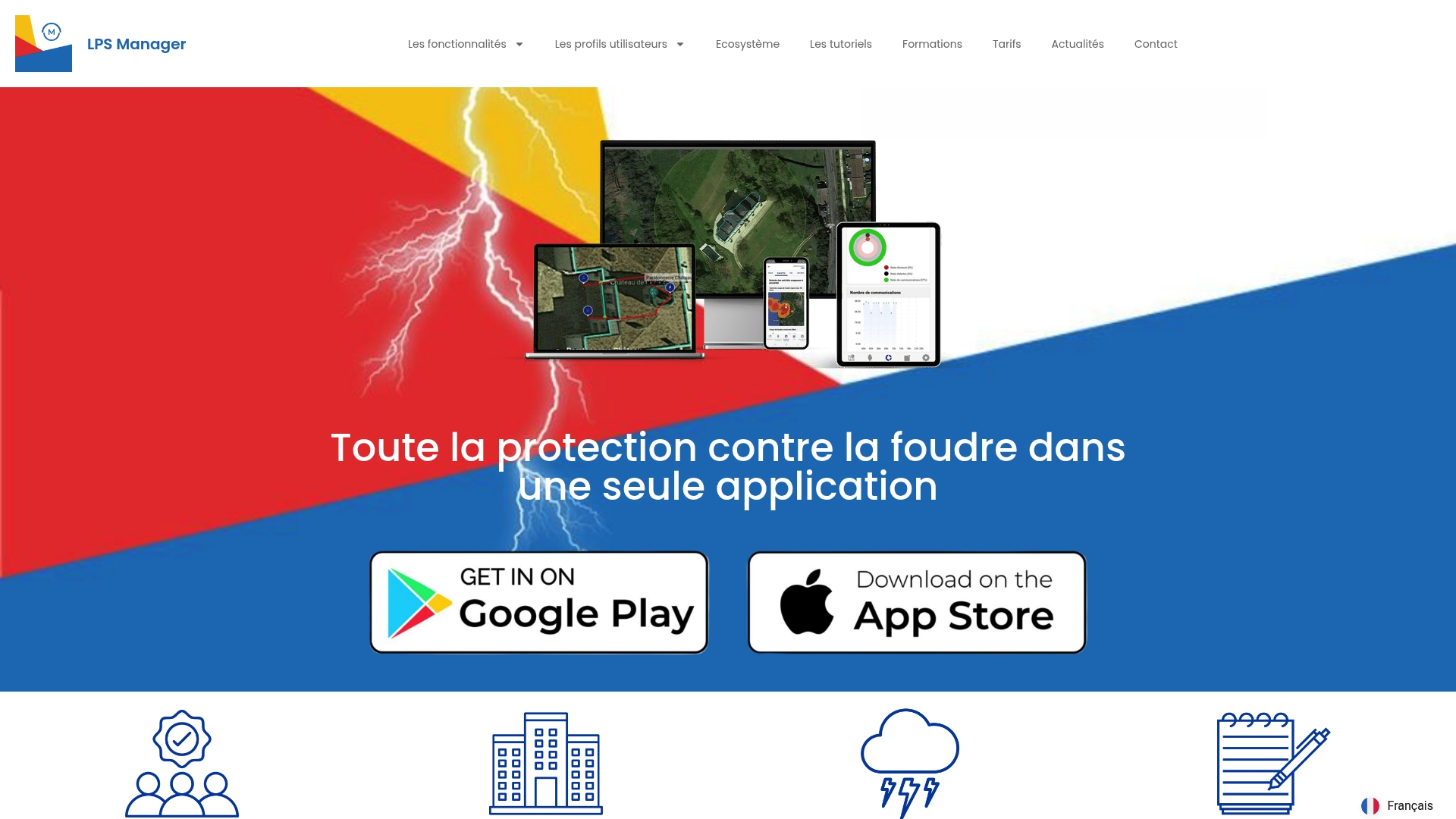
Take control of the safety of your sites with a certified and intuitive tool. Create your first files, conduct your analyses and easily track the status of your lightning protections thanks to LPS Manager. Transform regulatory complexity into operational advantage starting today.
Frequently Asked Questions
What are the risks related to lack of lightning protection?
The lack of lightning protection exposes people and infrastructure to risks such as electrocution, destruction of electronic equipment, structural damage to buildings and financial losses due to business interruption.
What are the main lightning protection devices?
The main devices include single rod lightning rods, mesh cage lightning rods, initiation devices (ESE) and grounding systems, each with specific characteristics adapted to different environments.
What are the regulatory requirements for lightning protection in France?
In France, requirements include compliance with standard NF C 17-102, conducting a lightning risk analysis (ARF), installing compliant systems and periodic verification of installations to ensure safety.
How to ensure compliance and effectiveness of a lightning protection system?
To ensure compliance and effectiveness, it is essential to conduct a precise risk analysis, engage certified professionals for installation, schedule periodic verifications and maintain complete documentation of interventions.
Recommendation
- Lightning protection terminology: safety and compliance
- Why is lightning dangerous? – LPS Manager
- What precautions to take during a storm in the presence of lightning? – LPS Manager
- NF C 17-102 IEC 62305: Choosing and Documenting (2026)
- 7 Essential home electricity safety tips for homeowners
- ATEX-Rated Lighting: Safeguarding Hazardous Businesses
